
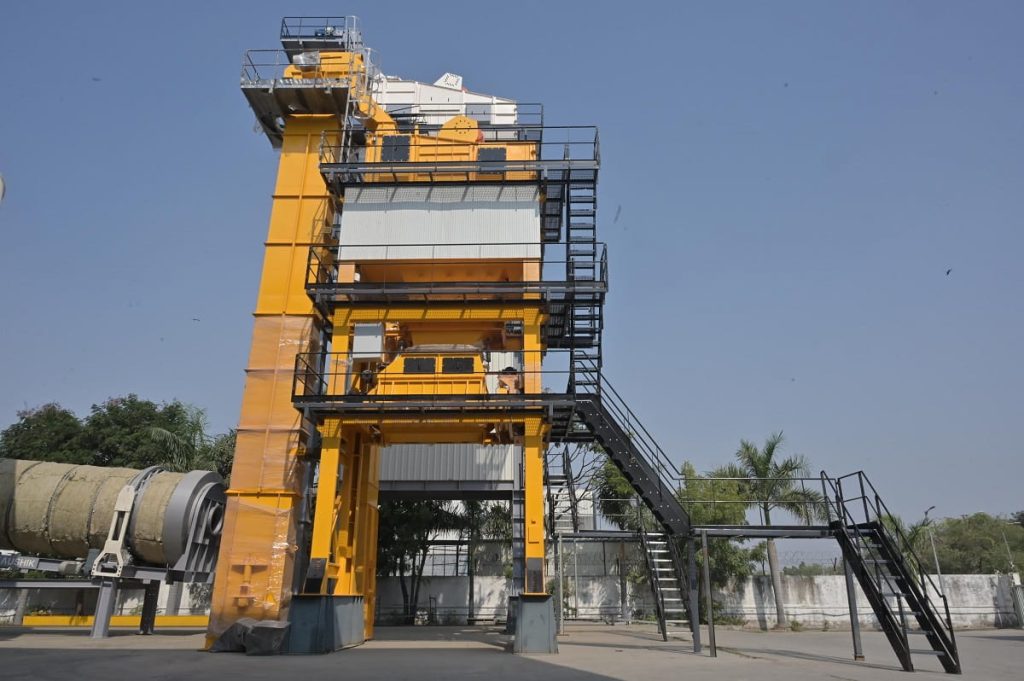
Choosing the right capacity for an asphalt batch mix plant is not merely a procurement decision — it is a long-term business strategy. Whether you are a road construction contractor bidding for NHAI tenders, a state highway developer, or an EPC company managing multiple simultaneous projects, the plant capacity you invest in will determine your production output, project timelines, cost per tonne of asphalt, and ultimately your profitability over the life of the machine.
At Kaushik Engineering Works, we have spent over 15 years manufacturing and supplying road construction equipment to clients across India and 35+ countries worldwide. One of the most common questions we hear from contractors before they invest is: “What TPH capacity plant do I actually need?” There is no one-size-fits-all answer — and this guide is designed to give you the structured framework to arrive at the right answer for your specific situation.
In India’s rapidly growing infrastructure landscape, where projects like Bharatmala Pariyojana, state highway development programmes, and urban road upgrades are creating sustained demand, buying the wrong plant capacity is a costly mistake. An undersized plant puts you perpetually behind schedule and forces overtime or subcontracting. An oversized plant consumes excess fuel, demands a larger workforce, and generates idle costs that erode margins. The goal is precise alignment — and this guide will help you achieve that.
What Does “Capacity” Actually Mean in an Asphalt Batch Mix Plant?
Before diving into selection criteria, it is important to understand what capacity means in the context of batch mix plants. Capacity is expressed in Tonnes Per Hour (TPH) and represents the volume of hot mix asphalt (HMA) the plant can produce under optimal operating conditions in one hour.
However, “rated capacity” and “actual working capacity” are different. Rated capacity assumes:
- Aggregate moisture content of around 3–5%
- Standard ambient temperature conditions
- Efficient fuel combustion
- No interruptions in aggregate, bitumen, or filler supply
- A mixing cycle of approximately 45–60 seconds per batch
In real-world field conditions, effective output can be 10–20% lower than the rated capacity due to aggregate moisture variability, supply chain delays, fuel quality fluctuations, and ambient temperature extremes. This is why experienced contractors always account for an operational buffer when selecting plant size.
Standard Capacity Ranges Available in India
|
Capacity Range |
Typical Applications |
| 80 – 100 TPH | Rural roads, panchayat roads, small municipal projects, district roads |
| 120 – 140 TPH | Urban road works, state highway upgrades, medium-scale contracts |
| 160 – 180 TPH | National highways, industrial corridors, large EPC contracts |
| 200 – 260 TPH | Expressways, airport runways, mega infrastructure projects |
| 300+ TPH | Premium export markets, large-scale joint ventures, dedicated highway corridors |
Step 1: Calculate Your Daily and Hourly Asphalt Demand
The foundational step in choosing plant capacity is calculating how much asphalt your project requires — not in a general sense, but in a precise, formula-driven manner.
The Core Formula
Required Plant Capacity (TPH) = Total Daily Asphalt Requirement (Tonnes) ÷ Effective Working Hours Per Day
To calculate total daily asphalt requirement, you need:
- Road length being paved per day (km)
- Road width (metres)
- Layer thickness — varies by layer type (DBM, BC, WMM, etc.)
- Bulk density of compacted mix — typically 2.3 to 2.4 tonnes/m³ for dense bituminous macadam
Example Calculation:
Suppose your project requires paving 2 km of road per day, 7 metres wide, with a 50 mm thick bituminous concrete (BC) layer:
- Volume per day = 2,000 m × 7 m × 0.05 m = 700 m³
- Weight = 700 × 2.35 = 1,645 tonnes/day
- If working 10 hours/day: Required capacity = 1,645 ÷ 10 = ~165 TPH
In this scenario, a 160–180 TPH plant is appropriate. If you factor in weather interruptions, breakdown buffer, and supply chain delays, choosing a 180 TPH plant gives you the safety margin to meet daily targets even on imperfect days.
This kind of calculation — project-specific, data-driven — is what distinguishes professional procurement from guesswork. Always make your capacity decision from real numbers, not rules of thumb.
Step 2: Factor in Project Duration and Multiple Project Commitments
A single project analysis is necessary but not sufficient. If you are running simultaneous contracts or have a pipeline of back-to-back tenders lined up, your plant capacity must accommodate peak demand across your entire workload — not just one project at a time.
Ask yourself:
- Do you currently hold or anticipate contracts where multiple paving crews will operate in parallel?
- Are any of your projects on time-bound NHAI deadlines with penalties for delay?
- What is your typical project duration — are you running 6-month projects, year-long highway programmes, or quick 30-day patch works?
For contractors managing multiple medium-scale projects simultaneously, a 160–180 TPH plant can serve two paving teams running in shifts. For single-crew, single-project operations in the 1,000–1,200 tonne/day range, a 120–140 TPH unit is often the most economical choice.
The 3–5 Year Forward Planning Rule:
One of the most common mistakes in plant procurement is sizing for today’s workload rather than tomorrow’s ambition. If you are actively growing your business, targeting NHAI or state highway prequalifications, or exploring exports to African or Middle Eastern markets, buying to today’s minimum needs means an expensive re-purchase in 2–3 years. Consider what your production requirements will look like over a 5-year horizon before you finalise the capacity decision.
Step 3: Understand How Asphalt Mix Type Affects Effective Output
Different asphalt mixes used in Indian road construction have varying production implications, and this directly affects how much usable output you get from a given capacity plant.
Common Asphalt Mix Types and Their Production Nuances
Dense Bituminous Macadam (DBM): Used for base and binder courses on national and state highways. DBM mixes use larger aggregate sizes and typically achieve good throughput.
Bituminous Concrete (BC): The wearing course on highways and expressways. BC mixes require finer gradation and precise temperature control, which can slightly reduce effective throughput compared to DBM.
Stone Matrix Asphalt (SMA): A premium wearing course mix with high stone content and cellulose or synthetic fibre addition. SMA requires a fibre dosing system and careful mix management — production rates are typically 10–15% lower than standard BC.
Mastic Asphalt: Used for bridge decks and airport pavements. Very high bitumen content mixes require longer mixing times, reducing effective hourly output significantly.
Reclaimed Asphalt Pavement (RAP) Mixes: Increasingly mandated by MoRTH guidelines for sustainable construction. If your plant handles RAP-incorporated mixes, you will need a properly configured RAP feeding and pre-heating system. KEW’s batch mix plants can be configured for RAP integration to meet this growing requirement.
The practical implication: if your project involves SMA or RAP-heavy mixes, factor in a 10–15% output reduction when sizing your plant. A project requiring 160 TPH of standard BC would need approximately a 185–190 TPH rated plant if producing SMA exclusively.
Step 4: Evaluate Site Conditions and Logistical Constraints
Plant capacity selection does not exist in isolation from site realities. Operational efficiency — and therefore effective output — is significantly influenced by site logistics.
Key Site Variables to Assess
Aggregate supply chain reliability: If your aggregates arrive in batches from a quarry 50 km away, and trucks queue at the plant, even a 200 TPH machine will produce far less due to aggregate starvation. Cold bin capacity and aggregate stockpile area matter as much as the plant’s rated output.
Bitumen supply and storage: For plants above 160 TPH, having sufficient heated bitumen storage (typically 2–3 bitumen tanks of 20–30 tonnes each) ensures continuous production without waiting for tanker replenishment mid-shift.
Power availability: Larger capacity plants (200+ TPH) draw significantly more electrical load. At remote project sites in rural India where grid power is unreliable, plant operators depend on DG sets. Ensure your power infrastructure matches the plant’s electrical demand specifications.
Available installation area: A 160 TPH batch mix plant requires a footprint of approximately 60 × 40 metres when including aggregate stockpiles, bitumen storage, filler silos, and truck movement. If your site is constrained, a modular or compact plant configuration from Kaushik Engineering Works may be the better fit.
Distance from paving site: If your plant is supplying mix to a paving crew 15–20 km away, transit time in loaded trucks must be factored into temperature maintenance requirements. In high-humidity conditions or monsoon seasons, this can affect mix temperature at the paver — which in turn may push contractors to produce at higher temperatures, increasing fuel consumption.
Step 5: Assess the Economics — Cost Per Tonne and ROI
One of the most important — yet frequently underanalysed — dimensions of plant capacity selection is the economics of production. The wrong capacity choice affects your cost per tonne of asphalt, which directly determines whether your project margins survive or erode.
How Capacity Affects Cost Per Tonne
A batch mix plant has both fixed costs (depreciation, insurance, operator salaries, maintenance provisions) and variable costs (fuel, bitumen, aggregates, filler, power). Fixed costs remain broadly constant regardless of whether you produce 80 TPH or 160 TPH per day.
This means: the more tonnes you produce per day, the lower your fixed cost per tonne. A plant running at 70% utilisation versus 95% utilisation will show a significant difference in fixed cost absorption per tonne.
Illustrative example:
|
Plant Scenario |
Fixed Cost/Day (₹) | Production/Day (Tonnes) |
Fixed Cost/Tonne (₹) |
| 120 TPH plant at 60% utilisation | ₹25,000 | 720 | ₹34.7 |
| 120 TPH plant at 90% utilisation | ₹25,000 | 1,080 | ₹23.1 |
| 160 TPH plant at 80% utilisation | ₹32,000 | 1,280 | ₹25.0 |
The 160 TPH plant at 80% utilisation performs comparably to a 120 TPH plant fully loaded — but gives you the headroom to scale output if needed. If your contracts consistently justify 1,200+ tonnes/day, the larger plant delivers better economics at scale.
Total Cost of Ownership vs Purchase Price
Many contractors focus on the purchase price of the plant without considering the total cost of ownership over a 10-year lifespan. Factors that contribute to total ownership cost include:
- • Fuel consumption: Fuel accounts for 20–35% of operating costs. An energy-efficient burner and dryer system — as featured in Kaushik Engineering Works’ batch mix plants — can reduce fuel consumption by 8–12% compared to older designs, translating to substantial savings over years of operation.
- Spare parts availability: Plants with locally sourced, readily available spares reduce downtime costs dramatically. KEW maintains a comprehensive spare parts network across India.
- Maintenance intervals: Robust construction of critical wear parts (mixer paddles, liners, screen panels) determines how frequently you replace consumables.
Step 6: Environmental Compliance and Pollution Control
India’s environmental regulations for hot mix plant operations have become significantly more stringent in recent years, with CPCB (Central Pollution Control Board) and State PCBs mandating stricter emission limits, particularly for particulate matter (PM) and stack emissions.
What This Means for Capacity Selection
Larger capacity plants produce proportionally higher exhaust volumes. As you move up in capacity, you must ensure your pollution control equipment scales accordingly:
- Baghouse filter efficiency: For plants above 120 TPH, a high-efficiency baghouse with proper sizing is non-negotiable. Kaushik Engineering Works’ plants are equipped with Nomex filter bags rated to handle up to 200°C, with emission levels below 20 mg/m³ — compliant with current Indian environmental standards.
- Burner fuel type: LDO, FO, natural gas, and PNG burners each carry different emission profiles. Natural gas and PNG burners offer the cleanest combustion and are increasingly required in urban project areas.
- Noise control: Projects within urban limits or near sensitive receivers may face noise restrictions, particularly for night operations. Plant placement and enclosure design matter.
When selecting a higher-capacity plant, always verify that the pollution control system is sized and certified for that capacity — not just the mechanical plant.
Step 7: Stationary vs. Mobile — Which Configuration Suits Your Capacity Need?
Capacity and configuration are linked decisions. The same 160 TPH of production can be achieved via a stationary plant or a high-capacity mobile plant — but the right choice depends on your project geography.
When to Choose a Stationary Asphalt Batch Mix Plant
Stationary plants are ideal when:
- You have a single large project lasting 12+ months at one location
- Project proximity to plant is consistent and manageable
- You need maximum output stability and automation features
- You are targeting NHAI-grade quality assurance requirements
Kaushik Engineering Works manufactures stationary batch mix plants in capacities from 80 TPH to 260+ TPH, designed for Indian site conditions with robust structural steel fabrication.
When to Choose a Mobile or Modular Asphalt Batch Mix Plant
Mobile plants are the right choice when:
- Your contracts require movement between sites every few months
- You work across a wide geographic footprint in one state
- Speed of relocation is a business priority
- Initial capital outlay needs to be minimised without sacrificing output
Modular batch mix plants offer the additional flexibility of containerised transport, making them particularly suitable for export-oriented contractors or projects in remote, access-constrained regions.
Why Kaushik Engineering Works — Experience That Goes Beyond the Machine
Selecting the right capacity is only half the decision. The other half is choosing the right manufacturing partner. At Kaushik Engineering Works, based in Sanand, Ahmedabad, we bring over 15 years of industry experience, ISO 9001:2008 (TUV) certification, and a proven track record of 1,238+ installations across 35 countries.
Our asphalt batch mix plants are manufactured through our partnership with Cesan A.S of Turkey — a global leader in mobile and stationary asphalt plant technology. This collaboration brings European engineering precision to Indian manufacturing costs, giving our clients world-class quality at competitive prices.
What Sets Kaushik Engineering Works Apart
- KEW Thermodrum Technology: Our proprietary triple heat transfer system — using conductive, convective, and radiant heat transfer — ensures maximum fuel efficiency and complete aggregate drying, even with high-moisture aggregates common in monsoon conditions.
- PLC-Based Automation: Our plants feature fully automated PLC control with touch-screen HMI for precise batch management, bitumen dosing accuracy, and real-time production data logging — critical for NHAI quality compliance documentation.
- Fuel-Flexible Burners: Burners capable of running on LDO, FO, HSD, natural gas, or LPG — giving contractors the flexibility to optimise fuel costs based on local availability.
- Comprehensive After-Sales Support: With a dedicated service team and spare parts availability pan-India, Kaushik Engineering Works ensures minimal downtime and maximum plant availability through your project cycles.
- Export-Ready Configuration: For contractors operating in Africa, the Middle East, or Southeast Asia, our plants are designed and shipped in configurations compliant with destination country requirements.
Common Capacity Selection Mistakes — And How to Avoid Them
Drawing on our 15+ years of experience supporting contractors, here are the most frequent errors we see in capacity selection:
Mistake 1: Using Competitor Plant Capacity as a Benchmark Just because your competitor runs a 120 TPH plant does not mean your business requires the same. Your project mix, geographic spread, and growth ambitions may justify a different choice entirely.
Mistake 2: Ignoring Aggregate Moisture Content Wet aggregates significantly reduce dryer efficiency and effective throughput. In coastal regions or high-rainfall areas of India, always apply a moisture correction factor when calculating required capacity.
Mistake 3: Choosing Minimum Viable Capacity Buying the smallest plant that meets your current needs eliminates your ability to take on larger contracts. The cost premium between a 120 TPH and a 160 TPH plant is rarely more than 25–30%, while the additional production headroom can double your contract-winning capability.
Mistake 4: Neglecting After-Sales Infrastructure A 200 TPH plant is useless if it is sitting idle waiting for spare parts that take three weeks to arrive. Before buying any plant, verify the manufacturer’s spare parts availability, service response times, and training support.
Frequently Asked Questions
Q1. What capacity plant is right for NHAI highway projects? Most NHAI highway projects demand consistent paving progress of 700–1,500+ tonnes/day. A 120–180 TPH plant is typically the right range, with exact sizing depending on daily paving targets specified in the contract.
Q2. Can a batch mix plant be upgraded to higher capacity later? Modular batch mix plants can be upgraded with additional silos, RAP systems, and higher-output mixing sections. However, the dryer and burner are the capacity ceiling — these are not easily upgraded. It is more cost-effective to select adequate capacity at purchase than to retrofit.
Q3. What is the difference between batch mix and drum mix plants for capacity selection? Batch mix plants offer superior mix design flexibility and are required for projects demanding SMA, gap-graded mixes, or precise formulation compliance. For capacity-focused, high-volume, lower-specification work, drum mix plants offer cost advantages. For most NHAI and state highway contracts in India, batch mix plants are preferred.
Q4. How does Kaushik Engineering Works help clients choose the right capacity? We provide a free pre-purchase consultation that includes a detailed analysis of your project requirements, logistical constraints, budget, and 5-year business plan. Our technical team helps you arrive at the optimal capacity, configuration, and optional features before you invest.
Conclusion
Choosing the right asphalt batch mix plant capacity is a decision that will shape your road construction business for the next decade. It demands a structured, data-driven approach — grounded in actual project calculations, honest assessment of your operational capabilities, and a clear view of where your business is headed.
The seven steps outlined in this guide — from calculating daily demand to evaluating economics, environmental compliance, and configuration options — provide a complete framework for making a confident, well-informed decision.
At Kaushik Engineering Works, we do not just sell machinery — we partner with contractors to help them grow. With 15+ years of experience, over 1,238 installations globally, and a joint venture with Cesan A.S of Turkey, we bring unmatched technical depth and after-sales reliability to every plant we supply.
Ready to find the right capacity for your next project? Contact us today for a personalised capacity assessment and quotation.
