
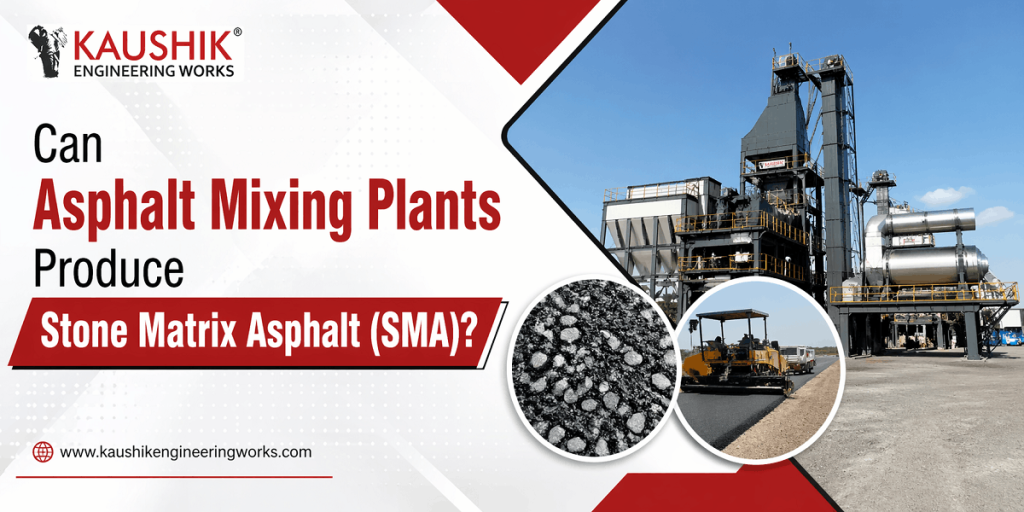
If a contractor already runs an asphalt mix plant, the natural question is simple: can that same plant produce Stone Matrix Asphalt (SMA), or does it demand a completely different setup? The short answer is yes, many asphalt mixing plants can produce SMA. But the real answer is more technical. SMA is not just a standard mix with a different name. It is a gap-graded, binder-rich mix built around stone-on-stone aggregate contact, and that changes how the plant must handle gradation, stabilisers, temperature, loadout, and quality control.
That is why this topic matters to plant buyers, contractors, and project teams comparing conventional production with speciality paving requirements. A plant that produces conventional hot mix well may still struggle with SMA if the operator does not control draindown, fibre feeding, temperature windows, and aggregate consistency closely enough. In practice, SMA production is less about whether the plant exists and more about whether the plant, the material system, and the operating discipline are ready for it.
Can Asphalt Mixing Plants Produce Stone Matrix Asphalt?
Yes, asphalt mixing plants can produce SMA, including both batch-type systems and many drum mix asphalt plant configurations. The plant, however, cannot run SMA the way it runs a conventional dense-graded mix. SMA uses a coarse aggregate skeleton, higher binder richness, mineral filler, and typically cellulose or mineral fibre to prevent draindown during storage and transportation. That means the production process has to become tighter, not broader.
For buyers looking at an asphalt drum mix plant or any other drum mix plant, this is the key commercial takeaway: the machine may be capable, but capability alone does not guarantee good SMA. The feeding system, additive handling, burner control, moisture discipline, and quality checks must all support the mix design. That is why a contractor should never judge SMA readiness only by tonnes per hour on a brochure.
Why SMA Is Different from Conventional Asphalt Mixes
Gap-Graded Structure and Stone-On-Stone Contact
SMA is designed differently from a normal dense-graded mix. It relies on a coarse aggregate skeleton that creates stone-on-stone contact for strength, while a rich mortar of binder and filler supports durability. Compared with standard hot mix production, this makes SMA more sensitive to gradation drift. If the aggregate blend moves outside the intended structure, the mix can lose the very internal framework that gives SMA its rut resistance and long-term performance.
Why Binder Control and Stabilisers Matter
SMA also carries a thicker asphalt film than many conventional mixes. That improves durability, but it increases the risk of draindown if the mix is not stabilised properly. This is why fibres are commonly used in SMA production. Indian SMA specifications and industry guidance both emphasise cellulose or mineral fibre use, draindown testing, and tighter production temperature control. In other words, SMA is not just aggregate plus extra bitumen. It is a controlled speciality mix.
What Changes in Plant Production When Making SMA
The biggest mistake plant teams make is assuming SMA only changes the recipe. In reality, it changes the production discipline inside the asphalt mix plant.
Aggregate Handling and Gradation Control
In SMA, aggregate gradation matters more because the coarse skeleton drives performance. A small shift in the cold feed blend can change void structure, stone-on-stone contact, and final stability. That means stockpile management, feeder accuracy, and continuous monitoring become more important than usual. A plant that produces an acceptable conventional mix with moderate feed variation may not deliver consistent SMA under the same operating habits.
For a drum mix plant, this becomes especially important because the process is continuous. Errors in feed consistency can carry through quickly. On a batch plant, adjustments may be easier to isolate by batch, but the principle is the same: SMA demands tighter control over the incoming aggregate stream.
Fibre or Additive Feeding
SMA production usually includes a stabilising additive, often cellulose or mineral fibre, to reduce draindown. This is not a minor optional step. Poor fibre dosing can lead to binder drain, mix inconsistency, and rejection risk. Industry guidance notes that both batch plants and drum plants have successfully handled fibre, but the feeding system and operator discipline have to be reliable. Loose handling, moisture exposure, or uneven addition can undermine the mix even when everything else looks correct.
Temperature and Binder Management
Temperature control becomes more critical with SMA. If production temperature runs too high, draindown risk rises. If it runs too low, coating and workability can suffer. Indian draindown testing guidance even requires testing at the anticipated plant production temperature and again at 10°C higher, which shows how closely temperature is tied to quality risk in SMA.
Binder handling also deserves closer attention. A richer mortar means the plant cannot afford careless pumping, inconsistent temperature holding, or poor blending discipline. When a polymer-modified binder is used, storage and circulation practices become even more important.
How SMA Affects Output, Fuel Use, and Plant Efficiency
A contractor does not just want to know whether an asphalt mix plant can make SMA. The practical question is whether it can make SMA efficiently.
The honest answer is that SMA can reduce effective plant output, especially during initial runs or when aggregate moisture, additive handling, and temperature discipline are not fully under control. That does not always mean dramatic production loss. It means the plant may have to run more carefully to keep the mix stable. In a conventional run, a team may chase peak tonnes per hour. In an SMA run, the smarter target is a stable usable output, not just nameplate capacity.
Fuel use can also change. Moisture control plays a major role here. NAPA guidance notes that aggregate moisture has a significant effect on burner fuel demand, and reducing moisture from 5 per cent to 4 per cent can cut burner fuel consumption by about 10 per cent. That is especially relevant to SMA because temperature consistency and mix stability matter so much. Wet aggregates do not just burn more fuel. They make process control harder.
There is also an interesting efficiency angle. Recent NAPA guidance notes that warm-mix technologies have been used during SMA production, and one cited case reported a 25 per cent reduction in burner fuel consumption when production temperature was lowered by 40 to 50°F. That does not mean every SMA project should switch approach blindly, but it shows that fuel performance in SMA production is closely tied to process design, not only to plant size.
Illustrative Comparison: Standard Mix vs Sma Production Run
| Parameter | Conventional Hot Mix Run |
SMA Production Run |
| Nominal production target | 120 TPH | 120 TPH |
| Stable usable output after tighter controls | 118–120 TPH | 105–112 TPH |
| Fibre/additive handling | Not critical | Critical |
| Sensitivity to moisture variation | Moderate | High |
| Temperature control tolerance | Wider | Narrower |
| Rejection risk from process drift | Lower | Higher |
| Real cost focus | Tonnes produced | Usable tonnes with consistent quality |
This is not a universal formula. It is a practical operating example. If an asphalt drum mix plant runs SMA with wet aggregates, uneven fibre feed, and frequent temperature drift, output can fall while fuel cost per usable tonne rises. If the same plant is well prepared, the penalty can be much smaller.
Quality Control Checks That Matter Most in SMA Production
When producing SMA, quality control should not be treated as a lab-only activity after the fact. It has to sit inside plant operations.
Draindown Control
Draindown is one of the most important SMA-specific checks. Indian guidance based on ASTM D6390 is explicit: the draindown characteristics of the mix should be determined at the anticipated production temperature and at a temperature 10°C higher. That is a strong reminder that SMA quality is tied to the real production window, not just theoretical design values.
Gradation and Binder Consistency
Because SMA relies on a carefully structured aggregate skeleton and a rich binder mortar, the plant has to verify that the blend stays where it should. If the coarse structure loosens, the mix can lose stability. If binder content or distribution becomes inconsistent, the mix may become messy in handling and unreliable in service. This is one reason SMA should never be run casually, just because the drum mix asphalt plant handled conventional mixes well last week.
Temperature Tracking and Records
Good SMA production also depends on disciplined records:
- Aggregate moisture trend
- Feeder settings
- Additive dosing
- Binder temperature
- Mix discharge temperature
- Loadout consistency
- Draindown and other lab checks
This matters for two reasons. First, it helps the plant respond quickly if quality drifts. Second, it creates traceability for project owners and site teams who need confidence in a premium wearing course mix.
When SMA Makes Sense for a Project
SMA is usually not chosen for the cheapest initial tonne. It is chosen where long-term surface performance matters. Common fit-for-purpose applications include:
- Heavy-traffic urban corridors
- Flyovers
- Intersections with repeated braking and turning
- Freight routes
- High-demand surface courses where rut resistance matters
That is why SMA keeps appearing in real project discussions, not just in technical manuals. In Bengaluru, civic road revamp work has included the use of Stone Matrix Asphalt on busy corridors and service roads, reflecting its value in high-density traffic conditions where durability and rut resistance matter.
At the same time, SMA is not automatically the right choice for every contractor or every job. If aggregate consistency is weak, additive handling is unreliable, or plant controls are not disciplined enough, a simpler mix may be safer. A plant should produce SMA because the project justifies it and the team can control it, not because the mix sounds premium.
Final Takeaway
So, can asphalt mixing plants produce Stone Matrix Asphalt? Yes. A properly prepared asphalt mix plant can produce SMA, and both batch plants and a well-managed drum mix plant can do it successfully. But SMA demands more than ordinary production habits. The plant has to control aggregate gradation, fibre or stabiliser feeding, binder handling, moisture, temperature, and draindown risk with much more discipline than a standard mix run.
For contractors evaluating an asphalt drum mix plant, the real question is not only whether the equipment can produce SMA. The real question is whether the complete plant system can produce it consistently, efficiently, and with the quality documentation modern projects expect. That is where experienced equipment guidance matters more than generic claims from broad asphalt suppliers.
If your team is assessing SMA readiness, choosing between plant configurations, or planning production for speciality mixes, Kaushik Engineering Works can help you evaluate the practical side of plant capability, output expectations, and production control. The right plant decision is not just about producing asphalt. It is about producing the right mix, at the right quality, for the right project.
Build the Right Plant Strategy for High-Performance Asphalt Production
Producing premium road mixes is not only about running an asphalt plant. It is about choosing the right system, configuring it correctly, and making sure it can deliver the mix quality your project demands every single time. When the job calls for tighter control, better consistency, and dependable output, the right technical guidance can make a measurable difference.
Kaushik Engineering Works supports contractors, infrastructure developers, and project teams looking for reliable solutions in asphalt mix plants requirements. Whether you are planning a new investment, comparing plant options, or evaluating how your existing setup can handle more demanding applications, our team can help you move forward with clarity.
Connect with Kaushik Engineering Works to discuss the right drum mix plant solution for your production goals, operating conditions, and long-term project needs. The right decision today can improve quality, efficiency, and confidence on every road project ahead. Send us an email to info@kaushikengineeringworks.com or call us at +91 – 98251 64764 for any queries.

