
Asphalt Drum Mix Plants (ADM plants) are essential pieces of equipment in the road construction industry. They play a vital role in producing the hot mix asphalt used for paving highways, roads, and other infrastructure. However, one aspect of these plants that is often overlooked is their impact on the environment, specifically the emissions they produce. With tightening environmental regulations worldwide, the focus on emission control systems in asphalt plants has never been more critical.
In this blog, we will explore the various emissions produced by asphalt drum mix plants, the importance of controlling these emissions, and the types of emission control systems commonly used in the industry. Additionally, we will discuss how construction equipment manufacturers are responding to the growing demand for cleaner, more sustainable solutions.
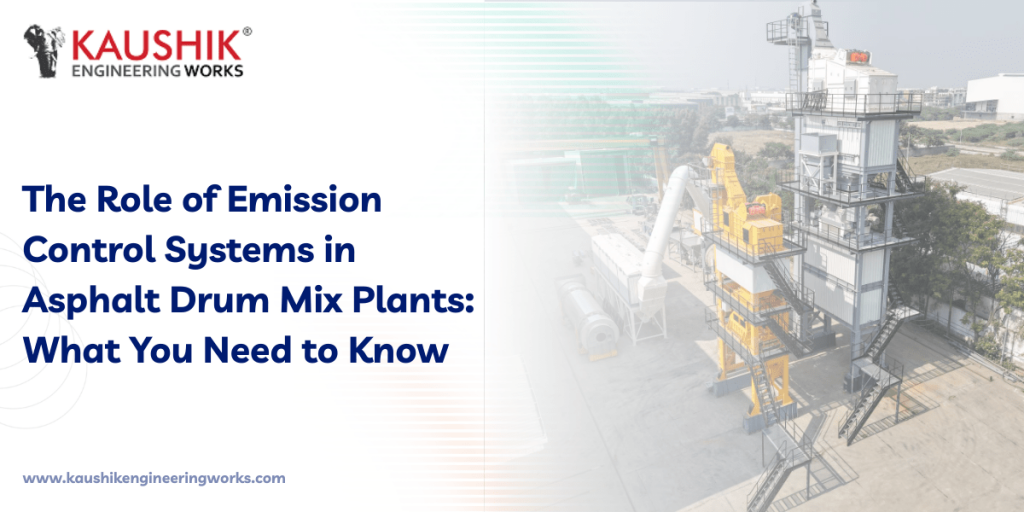
Understanding Emissions in Asphalt Drum Mix Plants
Asphalt drum mix plants are designed to heat aggregates and mix them with bitumen to create hot mix asphalt. This process generates various emissions, both in the form of particulate matter (PM) and gaseous pollutants. The most common emissions in an asphalt drum mix plant include:
1. Particulate Matter (PM) / Dust
Particulate matter is one of the most significant emissions produced by asphalt plants. As aggregates are heated and mixed with bitumen, fine dust particles are released into the air. These particles can be harmful to the environment and public health, as they may contain harmful chemicals and pollutants.
2. Gaseous Emissions
Asphalt production also produces gaseous emissions, including carbon monoxide (CO), nitrogen oxides (NOx), sulfur oxides (SOx), and volatile organic compounds (VOCs). These gases are generated during the combustion of fuel in the drying process. CO and NOx are particularly concerning because they contribute to air pollution and the formation of smog.
3. Fugitive Dust
Fugitive dust refers to particles that are not captured by the exhaust system and are released into the atmosphere during material handling, aggregate loading/unloading, and transport. Though not as easily controlled as other emissions, fugitive dust can contribute to the overall air pollution around the plant.
Given the potential environmental and health impacts of these emissions, it is crucial to implement effective emission control systems to reduce the pollutants released into the atmosphere.
The Importance of Emission Control in Asphalt Drum Mix Plants
Emission control systems are essential for several reasons, ranging from regulatory compliance to public health. Here are some of the key reasons why emission control is necessary in asphalt drum mix plants:
1. Regulatory Compliance
In many regions, there are strict regulations governing the emission levels of industrial plants, including asphalt mixing facilities. For example, the Environmental Protection Agency (EPA) in the United States sets specific limits on emissions from asphalt plants to reduce their impact on air quality. Similarly, the European Union and various countries in Asia have their own regulatory frameworks. Non-compliance with these regulations can result in hefty fines, legal penalties, or even the closure of the plant.
2. Public Health and Worker Safety
Dust and gases released by asphalt drum mix plants can have severe health implications for both plant workers and the surrounding community. Particulate matter, especially PM2.5, can cause respiratory diseases, cardiovascular problems, and other health issues. Gaseous emissions, such as NOx and CO, can contribute to the formation of ground-level ozone, leading to smog, which is harmful to both humans and the environment.
By controlling emissions, plant operators can create a safer, healthier working environment for employees and minimize the risks to local communities.
3. Environmental Impact
Asphalt plants are major contributors to air pollution if left unchecked. The environmental impact of these emissions extends beyond local health concerns. Particulate matter and gases like CO2 and NOx contribute to global warming and climate change. With increasing global awareness of climate issues, sustainable and responsible asphalt production has become a priority. Using efficient emission control systems helps reduce the plant’s carbon footprint, contributing to cleaner air and a healthier planet.
4. Enhancing Operational Efficiency
Effective emission control systems can also improve the operational efficiency of an asphalt drum mix plant. By capturing and recycling dust, plants can reduce material wastage, leading to cost savings. Furthermore, maintaining compliance with emission standards ensures that the plant avoids fines and disruptions, allowing for smoother operations.
Types of Emission Control Systems in Asphalt Drum Mix Plants
Several emission control technologies are employed in asphalt drum mix plants to capture dust and reduce the release of harmful gases into the atmosphere. The choice of system depends on the specific emissions produced, the size of the plant, and local regulatory requirements. Here are the most common types of emission control systems used in the industry:
1. Baghouse Filters (Fabric Filters / Dust Collectors)
Baghouse filters are the most widely used emission control systems in asphalt drum mix plants. These systems are designed to capture fine dust particles from the exhaust gases produced during asphalt production. The exhaust air is drawn through a series of fabric filter bags, which trap the dust particles as the air passes through. The filtered air is then released into the atmosphere, while the dust is collected in the hopper below.
Benefits of Baghouse Filters:
- High efficiency: Baghouse filters can capture up to 99.9% of dust particles, including very fine particles (PM2.5).
- Dust recycling: Collected dust can be returned to the asphalt mix, reducing material waste and enhancing plant efficiency.
- Long lifespan: With proper maintenance, baghouse filters can last for many years.
However, baghouses do require regular maintenance, including the cleaning or replacement of filter bags to maintain their effectiveness.
2. Wet Scrubbers
Wet scrubbers are used to control both particulate and gaseous emissions in asphalt plants. These systems use water or a chemical solution to capture pollutants from the exhaust gases. The exhaust gases are passed through a spray of water or a chemical solution, which traps dust and gases like sulfur dioxide (SO2) and volatile organic compounds (VOCs).
Benefits of Wet Scrubbers:
- Effective for both particulate matter and gaseous pollutants.
- Ideal for controlling gases produced by high-sulfur fuels or other pollutants.
- Can handle larger volumes of exhaust gases compared to some other systems.
However, wet scrubbers come with higher maintenance requirements, such as handling sludge and ensuring proper water treatment.
3. Electrostatic Precipitators (ESPs)
Electrostatic precipitators are used to capture fine dust particles in the exhaust stream of asphalt drum mix plants. ESPs work by charging dust particles as they pass through an electric field. The charged particles are then attracted to oppositely charged collection plates, where they are deposited and collected.
Benefits of ESPs:
- High efficiency for fine particulate matter.
- Low operational costs compared to wet scrubbers.
- Can handle high-temperature exhaust gases.
However, ESPs are less effective at controlling gaseous pollutants and are typically used in combination with other systems.
4. Cyclonic Separators
Cyclonic separators are often used as a pre-treatment stage in emission control systems. These devices use centrifugal force to separate larger particles of dust from the exhaust air. While they are not as efficient as baghouses or ESPs for capturing fine particulate matter, they can significantly reduce the load on downstream filters.
Benefits of Cyclonic Separators:
- Simple and cost-effective.
- Reduces the particulate load on more efficient systems like baghouses.
5. Hybrid Systems
Some modern asphalt drum mix plants use hybrid systems, which combine different emission control technologies to maximize efficiency. For example, a plant might use a baghouse filter in combination with a wet scrubber or an ESP to capture both particulate matter and gaseous emissions.
Benefits of Hybrid Systems:
- More effective at controlling both dust and gases.
- Provides greater flexibility in handling varying types of emissions.
- Can be customized to meet specific plant requirements and regulatory standards.
Benefits of Effective Emission Control Systems
Implementing efficient emission control systems in asphalt drum mix plants provides numerous benefits for both the plant operator and the surrounding environment. These benefits include:
1. Compliance with Environmental Regulations
As environmental regulations become stricter, asphalt plants must adopt emission control systems to comply with local and international standards. Failure to meet these regulations can result in costly fines, legal penalties, and potential plant shutdowns. By using effective emission control technologies, plant operators can ensure they stay compliant with environmental laws.
2. Improved Air Quality
Emission control systems help improve air quality by reducing the amount of dust and harmful gases released into the atmosphere. This not only benefits the local community but also contributes to global efforts to reduce pollution and mitigate climate change. By capturing and recycling dust, asphalt plants can reduce their environmental footprint and help promote cleaner, healthier air.
3. Cost Savings
Although the initial investment in emission control systems can be significant, they can result in long-term cost savings. By capturing and recycling dust, asphalt plants can reduce the amount of raw materials required for production. This not only reduces material costs but also decreases the need for waste disposal.
4. Healthier Work Environment
Controlling emissions in asphalt plants improves the working conditions for plant employees. By reducing the amount of dust and harmful gases in the air, plant operators can create a safer, healthier work environment. This can reduce the risk of respiratory diseases, improve worker productivity, and lower healthcare costs for employees.
5. Sustainability and Public Perception
Asphalt drum mix plants that prioritize emission control are viewed as more environmentally responsible by the public, clients, and regulators. This positive reputation can lead to increased business opportunities, especially in regions where sustainability is a priority. Moreover, by reducing emissions, plants contribute to global sustainability efforts, helping to reduce the impact of the construction industry on the environment.
The Role of Construction Equipment Manufacturers in Emission Control
Construction machine manufacturers play a critical role in the development and implementation of emission control systems in asphalt drum mix plant. By designing and manufacturing plants that incorporate advanced emission control technologies, these manufacturers help asphalt plants comply with environmental regulations and improve operational efficiency.
Manufacturers must also stay ahead of evolving environmental standards and invest in research and development to create innovative solutions. For example, the integration of smart sensors and real-time monitoring systems into emission control systems allows plants to optimize their operations and reduce emissions more effectively. These technologies enable plant operators to detect issues early and take corrective actions before emissions exceed acceptable limits.
Frequently Asked Questions
1. What is the most common emission control system used in asphalt drum mix plants?
The most common emission control system in asphalt drum mix plants is the baghouse filter. This system efficiently captures particulate matter (dust) from exhaust gases, helping plants meet environmental regulations. It is widely used due to its high efficiency and ability to recycle collected dust back into production.
2. How do wet scrubbers help reduce emissions in asphalt plants?
Wet scrubbers control emissions by using water or chemical solutions to capture both dust and gaseous pollutants from exhaust gases. As air passes through the scrubber, pollutants are trapped in droplets, reducing particulate and gas emissions. This system is especially useful for controlling sulfur dioxide and VOCs in asphalt production.
3. Can emission control systems be retrofitted to existing asphalt drum mix plants?
Yes, emission control systems can often be retrofitted to existing asphalt drum mix plants. Upgrading to more efficient filters, scrubbers, or hybrid systems can help older plants meet current regulatory standards. Retrofitting allows operators to extend the lifespan of their equipment while improving environmental performance.
4. How do construction equipment manufacturers contribute to emission control?
Construction equipment manufacturers design and build asphalt plants with integrated emission control technologies. These manufacturers stay ahead of regulatory changes by incorporating advanced systems like real-time monitoring and smart sensors to optimize emission reduction, improve efficiency, and ensure compliance with evolving environmental standards.
5. Are mobile asphalt drum mix plants equipped with emission control systems?
Yes, mobile asphalt drum mix plant are increasingly equipped with emission control systems such as baghouse filters and dust collectors. These mobile units offer flexibility for various job sites while ensuring that emissions are properly managed, making them ideal for construction projects in urban or environmentally sensitive areas.
Partner with the Leading Manufacturer for Cleaner Asphalt Production
As a trusted construction equipment manufacturer, Kaushik Engineering Works provides asphalt drum mix plants equipped with advanced emission control systems designed for maximum efficiency and sustainability. Our solutions, including baghouse filters and wet scrubbers, help minimize emissions, ensure compliance, and improve plant performance.
Whether you operate a mobile asphalt plant or a stationary facility, our eco-friendly technologies support your operations and protect the environment. Stay ahead of regulations and boost productivity with our cutting-edge equipment. Contact us at +91–98251 64764 or email us at info@kaushikengineeringworks.com to learn how our innovative solutions can enhance your asphalt production process!
