
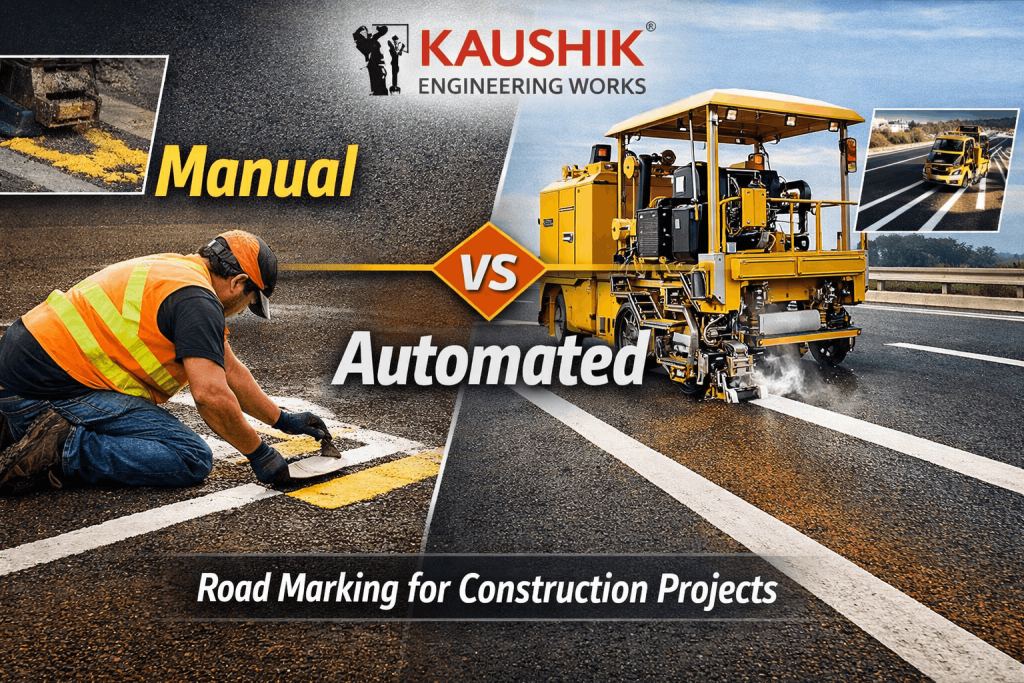
Road infrastructure is expanding rapidly across the country. Every new highway requires clear and durable traffic lines to keep drivers safe. Contractors face a big decision on how to apply these lines efficiently. The choice often comes down to traditional manual labour or investing in an advanced road marking machine. Both methods have existed for years. However, modern infrastructure demands speed and high precision. This guide breaks down the differences between manual application and automated systems to help you choose the best approach for your operations.
The Role of Traffic Lines in Highway Safety
Clear lines are vital for guiding drivers and preventing accidents. They mark lane boundaries and highlight pedestrian zones. Applying these lines correctly is a huge responsibility for project managers. A tiny error can cause traffic confusion or severe accidents. The application method you choose directly impacts the safety and durability of the final road surface. High traffic volumes require markings that can withstand constant wear and tear.
Traditional Manual Road Marking Techniques
Manual marking relies heavily on basic hand tools. Workers use wooden stencils, heavy rollers, and hand brushes to paint the lines. They mix the paint manually on the site and apply it directly to the hot asphalt. This process requires a large labour force and is extremely slow. Workers spend hours kneeling on dangerous and busy roads. The manual method depends entirely on human skill and endurance. A tired worker will eventually paint a crooked line or apply the paint too thin. Thin paint fades fast. Uneven application reduces the lifespan of the markings and requires frequent repainting.
The Transition to Mechanised Marking Solutions
The boom in highway construction required a faster, more reliable solution. Contractors could no longer rely on slow hand painting for massive national projects. This urgency led to the rise of the automated road marking machine. Top construction equipment manufacturers began designing high-capacity units to handle huge daily workloads. A modern machine heats thermoplastic material to the exact right temperature. It then extrudes the paint evenly onto the road surface and drops reflective glass beads perfectly on top. This automation completely removes human error from the equation.
Direct Comparison Between the Two Methods
Let us look closely at how manual labour compares to using a dedicated road marking machine across the most important project parameters.
1. Speed of Execution and Project Deadlines
Time is money in road construction. Manual marking teams might cover a few hundred meters in a full day because workers need constant breaks, and setup takes time. In contrast, a modern road marking machine can finish several kilometres in a single shift. High-speed highway projects simply cannot afford manual delays. Using mechanised equipment ensures you meet strict government deadlines easily.
2. Precision and Consistency of the Lines
Quality control is incredibly difficult with manual application. Human hands shake, and stencils shift during the painting process. The result is often blurry edges and uneven paint thickness. A road marking machine guarantees perfect straightness and sharp edges every single time. The mechanical extrusion maintains a constant thickness throughout the entire project. This uniformity ensures the line reflects light properly at night.
3. Material Efficiency and Waste Reduction
Manual workers frequently spill paint or apply too much material in certain spots. This wastes expensive thermoplastic compounds and ruins your project budget. A well-calibrated road marking machine uses the exact amount of material required for the specific code. Advanced sensors control the paint flow rate perfectly. Good construction equipment manufacturers design these machines specifically to prevent costly clogs and material leaks.
4. Workforce Safety and Operational Fatigue
Road construction sites are highly dangerous environments. Workers applying lines manually are exposed to active traffic for long hours. They also breathe in toxic fumes from hot materials. A road marking machine actively protects your crew. The operator usually sits safely on the machine or walks behind it at a secure distance. The machine finishes the job much faster. This drastically reduces the time your team spends in a hazardous work zone.
Key Features of a High Quality Road Marking Machine
Contractors must evaluate their equipment carefully before making a purchase. Not every machine offers the same level of reliable performance and durability. You should look for these specific features when buying from reputable construction equipment manufacturers.
1. Robust Heating Tanks for Thermoplastic
The machine must have a strong and well-insulated heating tank. The tank needs to maintain a consistent high temperature so the thermoplastic powder melts perfectly. Uneven heating leads to clumpy paint and ruined lines on the asphalt.
2. Precision Extrusion Shoes
The extrusion shoes dictate the final crispness of your line. High-quality shoes prevent the hot paint from bleeding over the edges. They ensure the material flows smoothly onto the asphalt without leaving any gaps or thin spots.
3. Advanced Pressurised Bead Dispensers
Nighttime visibility relies entirely on tiny glass beads. The machine must feature a pressurised dispenser that shoots the beads directly into the hot paint. This ensures the beads sink exactly halfway into the material for maximum retro-reflectivity.
4. Intuitive Control Panels and Laser Guidance
The central control panel should be easy for any operator to learn and understand quickly. Advanced models also feature laser guidance systems. These lasers project a perfectly straight visual line on the road for the operator to follow effortlessly.
Exploring Different Types of Marking Materials
A versatile road marking machine can handle various chemical substances depending on the specific project requirements.
1. Durable Thermoplastic Paint
This is the most common material used for heavy traffic zones in India. You receive this material as a dry powder for application. The machine heats it until it melts into a thick liquid. Thermoplastic provides incredible durability and bonds strongly with the rough asphalt surface.
2. Cold Plastic Marking Systems
Cold plastic is a unique two-component system that cures through a rapid chemical reaction instead of applied heat. It is highly resistant to severe wear and tear. Contractors often use it for high-stress areas like city roundabouts and busy intersections.
3. Water-Based Acrylic Paints
These paints are environmentally friendly and dry very quickly on the surface. They are typically used for temporary markings during road repairs or on massive airport runways. You must ensure your machine is properly configured to spray these thinner liquids without clogging the internal valves.
Evaluating the Financial Impact and ROI
Many contractors hesitate because of the initial purchase price of a new road marking machine. However, you must evaluate the long-term return on investment to see the true value.
1. Reducing Long-Term Labour Costs
The machine pays for itself rapidly by reducing your daily reliance on manual labour. You need significantly fewer workers to complete the same amount of work. This drops your recurring labour costs dramatically over a year.
2. Minimising Expensive Material Waste
Automated flow controls stop manual workers from applying too much paint by mistake. You can accurately predict your total material costs before the project even starts. This precision protects your profit margins on every single job you take.
3. Avoiding Costly Rework and Inspections
Manual markings frequently fail strict government quality inspections. Reworking a rejected highway stretch destroys your budget and your timeline. A mechanised system gets the job done right the first time, so you pass every inspection easily.
Meeting Stringent Indian Road Congress Standards
Government bodies like the National Highways Authority of India enforce strict rules for contractors. The Indian Roads Congress sets specific standards for traffic lines regarding exact thickness and nighttime visibility. Manual marking simply cannot meet these modern requirements consistently. Highway inspectors now use digital tools to check line quality and retro-reflectivity. An automated road marking machine is built specifically to meet these exact codes. The machinesynchronisess the paint extrusion with the bead dispenser to create a highly reflective surface that passes every single test.
The Crucial Role of Construction Equipment Manufacturers
The final success of your projects depends heavily on the tools you buy. Reliable construction equipment manufacturers do much more than just sell heavy machines. They provide essential on-site training for your operators to ensure safety and efficiency. A high-tech machine requires proper daily maintenance to last for years. Good manufacturers offer fast after-sales support and readily available spare parts. Choosing a trusted local manufacturer like Kaushik Engineering Works ensures your equipment is built specifically for tough Indian road conditions and extreme weather.
Maintaining Your Equipment for Longevity
Regular upkeep helps your equipment operate without expensive breakdowns. The most critical step is daily equipment cleaning. Thermoplastic hardens like rock very quickly when it cools down. If left inside the system overnight, it will destroy the internal liquid pumps and metal valves. Operators must flush the entire system thoroughly after every single shift. You also need to inspect the heating burners regularly to avoid cold spots. Always follow the specific maintenance schedule provided by your manufacturer to prevent costly breakdowns on the highway.
Scaling Your Contracting Business With Automation
Growth is the ultimate goal for any ambitious construction firm. You simply cannot scale a business if you rely on slow manual labour for road striping. Managing huge manual teams across different cities becomes a logistical nightmare. Buying a high-capacity road marking machine completely transforms your daily operations. It allows you to bid confidently on massive national highway tenders. You can promise fast completion times and showcase flawless physical work to the authorities. This level of professionalism helps you secure much larger contracts and grow your business safely.
Conclusion
The choice between manual and automated methods is very clear for any serious infrastructure project. Manual application is too slow and produces inconsistent results that hurt your bottom line and reputation. Embracing a modern road marking machine elevates your entire workflow instantly. It guarantees absolute precision, boosts your daily output, and ensures you meet all strict highway safety standards. Partnering with proven construction equipment manufacturers gives you the reliable technology you need to scale your operations. Upgrading your heavy fleet is the smartest step toward delivering flawless roads and securing a highly profitable future in the competitive construction industry.
Frequently Asked Questions
1. What weather conditions are ideal for operating a road marking machine?
For the best paint adhesion, the asphalt surface must be completely dry. The outside temperature should ideally sit above 10 degrees Celsius. Applying materials during high humidity or rain will ruin the final finish and prevent the paint from bonding securely.
2. How long does it take for automated traffic lines to dry?
Thermoplastic materials typically cure within two to five minutes after hitting the road surface. This incredibly fast drying time allows contractors to reopen lanes to the public and minimise traffic disruptions almost immediately.
3. What is the average working lifespan of commercial striping equipment?
When you buy from reputable construction equipment manufacturers and follow strict daily maintenance routines, a heavy-duty unit will last a long time. Most contractors get between ten and fifteen years of active service from their machines.
4. Can these units apply complex arrows and pedestrian symbols?
The main extrusion shoes handle continuous straight lines perfectly. However, modern units often include specialised hand-held extrusion guns attached directly to the main heating tank. This allows operators to easily fill in directional arrows and detailed crosswalks.
5. Does the pavement need special preparation before applying new lines?
Yes. Mechanical sweepers must clear the asphalt of all loose dust, gravel, and chemical spills before any painting begins. A perfectly clean surface is mandatory for the hot thermoplastic to fuse correctly with the rough road texture.
Transform Your Projects With Our Road Marking Machine
Relying on outdated manual methods slows down your infrastructure projects and eats into your profit margins. It is time to equip your workforce with technology that delivers speed and flawless accuracy. Upgrading your fleet with a high-performance road marking machine helps you secure bigger government tenders and finish highway stretches well ahead of schedule.
As one of the leading construction equipment manufacturers in India, Kaushik Engineering Works builds durable machinery designed specifically for tough site conditions. Our equipment ensures perfectly straight lines and strict compliance with all national safety standards. You get reliable performance with zero material waste.
Stop losing bids to faster competitors who use automated tools. Let our expert engineering team help you choose the perfect model for your exact project needs. Contact Kaushik Engineering Works today at +91 – 98251 64764 or drop us an email at info@kaushikengineeringworks.com to request a custom quote and maximise your daily operational efficiency.
