
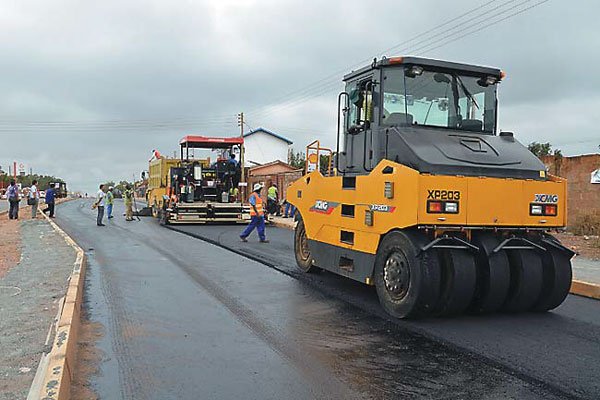
When people picture road construction equipment, they usually think of the machines visible at the final stage — pavers laying hot asphalt, rollers pressing it flat. But by the time a paver reaches a site, the ground has already been cleared, graded, compacted, and prepared through several distinct construction stages, each requiring a different category of machinery. Understanding which equipment belongs at which stage — and why — is what separates an efficient road project from one plagued by delays and rework.
This guide breaks the road construction process into its core stages and explains exactly which equipment does what at each one — from initial site clearing through final marking and finishing — so project managers, highway contractors, and infrastructure developers can plan equipment selection around their project’s actual workflow rather than a generic checklist. At Kaushik Engineering Works, we have been manufacturing and supplying road construction equipment for over 15 years across India and 35+ countries — this guide draws on that field experience.
The Road Construction Process — Stage by Stage Overview
Road construction machinery is not interchangeable across stages — each phase has a specific mechanical requirement, and using the wrong category of equipment at the wrong stage is one of the most common causes of schedule slippage and quality failure on Indian highway projects. NHAI and MORTH specifications define not just material standards but equipment standards at each stage — understanding this sequence is essential for contract compliance.
| Stage | Core Equipment | Function |
|---|---|---|
| 1. Site Clearing & Earthmoving | Bulldozers, excavators, scrapers, motor graders, loaders | Clear vegetation and debris, cut and fill terrain, establish working grade |
| 2. Subgrade & Base Preparation | WMM plants, motor graders, vibratory compactors | Build a stable, MORTH-compliant load-bearing base layer |
| 3. Aggregate Preparation | Stone crushers, screens, conveyors | Crush and size aggregate to required mix design gradation |
| 4. Mixing & Paving | Asphalt drum/batch mix plants, concrete batching plants, paver finishers | Produce hot mix and lay it to the required thickness and profile |
| 5. Compaction | Vibratory rollers, static rollers, pneumatic-tyred rollers | Eliminate air voids, achieve target density for load-bearing strength |
| 6. Finishing & Ancillary | Road sweepers, bitumen distributors, road marking machines | Surface prep, tack coat, lane marking, site support |
Stage 1 — Site Clearing and Earthmoving
Every road project begins with clearing the corridor and shaping the terrain to the design grade. This stage involves the heaviest and most powerful machines on the project — bulldozers push and clear vegetation, rock, and debris; excavators handle cut-and-fill work and drainage trenching; motor graders establish the finished subgrade level with precision blade control; and scrapers move large volumes of soil over short-to-medium hauls when cut-and-fill quantities are high.
On Indian highway projects, earthmoving is guided by the road’s longitudinal section and cross-section drawings — achieving the design formation level within tolerance before any base layer material is placed. Getting this stage right, particularly subgrade compaction and drainage fall, determines whether the finished road holds up under traffic load over its design life or fails prematurely from water ingress and differential settlement. MORTH specifications require subgrade compaction to 97% of maximum dry density (modified proctor) before any base layer is placed — a requirement that is only achievable with properly selected and operated compaction equipment.
Stage 2 — Subgrade and Base Preparation
Once the subgrade is shaped and compacted, a granular base layer is constructed before any bituminous wearing course goes down. On MORTH-compliant Indian highway projects, this base is almost always Wet Mix Macadam (WMM) — a mechanically blended mixture of graded aggregate and water produced at a wet mix macadam plant and compacted in layers.
WMM plants proportion aggregate fractions and water in a pugmill mixer to produce a uniform, specification-compliant base material. The WMM layer is spread by a motor grader, compacted by a vibratory roller to the required density (minimum 98% of maximum dry density per MORTH Clause 406), and then allowed to cure before the next layer is placed. Skipping or under-specifying this stage is one of the most common root causes of premature cracking and rutting in the finished pavement — a failure that typically appears within the first monsoon season after road opening.
For roads with higher base course requirements, Granular Sub-Base (GSB) layers are constructed below the WMM using similar equipment — spreading by motor grader and compaction by vibratory roller in controlled lift thicknesses.
Stage 3 — Aggregate Preparation
Stone crushers, screens, and conveyor systems reduce quarried rock to the specific aggregate gradation the mix design requires. This stage is easy to overlook because it happens away from the main road corridor at a quarry or crushing plant, but aggregate gradation directly determines the strength and durability of the asphalt or concrete mix that follows — inconsistent aggregate sizing produces inconsistent mix performance, regardless of how well-calibrated the asphalt or concrete plant is.
On NHAI highway projects, aggregate quality must meet MORTH physical property requirements — Los Angeles Abrasion Value ≤30% for wearing course aggregates, Flakiness and Elongation Index ≤30% combined, and water absorption ≤2%. Failing to source aggregates that meet these requirements creates compliance failures that show up at the quality control testing stage, not during production.
Stage 4 — Mixing and Paving
This is the stage most visible to the public and where the road’s wearing surface is actually produced and laid. The equipment used at this stage determines the road’s surface quality, smoothness, and long-term durability more directly than any other stage — including earthmoving.
For asphalt roads: Asphalt drum mix plants produce hot mix asphalt continuously at 40 to 150+ TPH by drying and blending aggregate with bitumen in a rotating drum. Asphalt batch mix plants produce the same material in precisely weighed batches, giving greater mix design flexibility for projects requiring multiple asphalt grades. Once produced, hot mix is transported to the paving site and laid by a hydrostatic paver finisher, which controls thickness, width, and cross-slope in a continuous pass at 3 to 8 metres per minute.
For concrete roads: Mobile concrete batching plants produce the concrete mix at site and discharge into transit mixers or directly to the pour point. Slipform pavers then lay and finish the concrete slab in a continuous operation.
Paver speed, plant output, and truck cycle time must be precisely matched at this stage — a paver that stops because trucks are delayed creates transverse joints in the mat that are weak points for early cracking. Coordinating plant production with paving speed is the central logistical challenge of any highway paving operation.
Stage 5 — Compaction
Freshly laid asphalt or concrete must be compacted while still workable to eliminate air voids and achieve the density the mix design was engineered for. Three roller types are used in sequence on asphalt projects:
- Vibratory roller (breakdown rolling): Applied immediately behind the paver while the mix is hottest and most workable — provides the bulk of the compaction. MORTH requires minimum 92% of theoretical maximum density for bituminous concrete wearing course.
- Pneumatic-tyred roller (intermediate rolling): Follows the vibratory roller — the kneading action of the rubber tyres improves particle interlock and density uniformity across the mat.
- Tandem smooth-drum roller (finish rolling): Applied last while the mix is still warm — removes roller marks and seals the surface texture.
Under-compaction is one of the most common and most avoidable causes of premature rutting and moisture damage in Indian highway pavements. Failures from under-compaction typically only become visible months after construction — long after the compaction stage is complete and the contractor has moved on. Getting compaction right requires matching roller type, speed, and pass count to the mix type and layer thickness, not simply making a few passes with whatever roller is available.
Stage 6 — Finishing and Ancillary Equipment
Several supporting machines complete the road before it opens to traffic:
- Bitumen pressure distributors: Apply tack coat between asphalt layers and prime coat over the WMM base — creating the adhesive bond between pavement layers that prevents delamination under traffic. This step must be preceded by thorough surface cleaning — a contaminated tack coat creates delamination regardless of bitumen application rate.
- Hydraulic road sweepers: Clean the road surface before tack coat application, before paving, and before road marking — removing dust and loose aggregate that would compromise adhesion at each stage. On NHAI projects, surface cleanliness before tack coat is a mandatory quality hold point.
- Road marking machines: Apply thermoplastic lane markings, edge lines, stop lines, and arrow markings once the surface has cured. IRC:35 specifies retroreflective glass bead-embedded markings on all national and state highways — applied by the road marking machine immediately after the thermoplastic material is laid.
- Cranes, generators, and water distributors: Provide site-wide support across all stages — material handling, power supply, and dust suppression.
How to Choose the Right Road Construction Equipment for Your Project
Equipment selection should be driven by four factors: project scale (daily tonnage and area requirements dictate plant capacity), terrain and site conditions (rocky or uneven ground favours tracked machines over wheeled ones), material type (asphalt versus concrete construction calls for entirely different mixing and paving equipment), and project duration (short-duration or multi-site work often justifies mobile plant configurations over static installations).
On Indian highway projects specifically, equipment selection must also account for NHAI and MORTH plant approval requirements — some contract specifications require plant inspection and approval before mobilisation. Confirming equipment compliance early avoids costly last-minute substitutions after contract award.
For a complete stage-wise equipment planning guide for highway projects specifically, refer to our road construction equipment guide for highway projects on our blog.
The Advantages of Mechanised Road Construction in India
- Speed: Mechanised paving and compaction multiply output per shift compared to manual methods — an NHAI highway contract that might take years manually can be completed in months with the right plant fleet
- Consistency: PLC-controlled batching plants, GPS-guided graders, and automated paver screeds remove operator variability from critical quality-determining steps
- Compliance: Modern equipment produces the documentation — batch records, calibration certificates, density reports — that government quality audits require
- Lower long-term cost: Properly compacted and finished roads require significantly less maintenance over their design life than manually constructed alternatives
- Labour efficiency: Mechanisation reduces dependence on large manual labour forces — an increasingly relevant advantage as skilled construction labour becomes harder to source in India’s Tier 2 and Tier 3 project locations
Frequently Asked Questions — Road Construction Equipment
What equipment is used at each stage of road construction in India?
Indian highway construction uses: bulldozers and excavators for site clearing, motor graders and vibratory compactors for subgrade preparation, wet mix macadam plants for base course production, asphalt drum or batch mix plants for hot mix production, paver finishers for laying, and rollers for compaction. Bitumen pressure distributors, road sweepers, and road marking machines complete the finishing stage. All equipment must comply with MORTH and NHAI specifications applicable to the contract.
How does equipment selection affect road construction timelines?
Selecting the right capacity and type of machine for each stage directly affects project speed. Undersized mixing plants create bottlenecks that cascade through the paving and compaction schedule. Poorly matched roller fleet sizes mean the paver must slow down to allow adequate compaction — which reduces daily output and increases the risk of mat cooling before target density is achieved. Properly matched equipment keeps clearing, mixing, paving, and compaction stages running in sync.
What is the difference between equipment for asphalt roads and concrete roads?
Asphalt roads use drum or batch mix plants to produce hot mix asphalt and asphalt paver finishers to lay it. Concrete roads use batching plants for the concrete mix and slipform pavers for laying. Earthmoving, base preparation (WMM), and compaction equipment are shared across both road types — the divergence is at the mixing and paving stage.
Why is compaction the most critical stage in road construction?
Compaction eliminates air voids in freshly laid asphalt or concrete and determines the pavement’s final density and load-bearing strength. Under-compacted layers are significantly more susceptible to rutting, cracking, and moisture damage — and these failures typically only become visible months after construction, under traffic load. MORTH specifies minimum density requirements for each pavement layer that must be verified by field density testing before the next layer is placed.
How do contractors decide between mobile and stationary road construction plants?
The decision depends on project duration, number of sites, and site access. Mobile plants suit projects spanning road corridors or multiple locations — they can relocate as the project progresses, eliminating long hauls of hot mix from a fixed plant. Stationary plants suit high-volume, long-duration, single-location projects where lower per-unit cost at scale outweighs setup time. Most Indian highway projects use mobile asphalt plants for this reason.
What maintenance practices extend road construction machinery life?
Scheduled lubrication, hydraulic system inspection, filter replacement, and calibration checks on mixing and batching equipment all reduce unplanned downtime. Machines operating in abrasive or high-temperature Indian site conditions — crushers, compactors, mixing plants — need more frequent inspection cycles than equipment used intermittently. Calibration of weigh systems on batching plants should be checked after every relocation and at least weekly during active production.
Get the Right Equipment for Every Stage of Your Road Project
Kaushik Engineering Works manufactures and exports road construction equipment for every stage of the process — from wet mix macadam plants and asphalt mixing plants to concrete batching plants, bitumen distributors, and road sweepers. With 15+ years of manufacturing experience and 1,238+ plant installations across India and 35+ countries, our team can help you select the right equipment configuration for your project’s stage requirements, terrain conditions, and contract specifications. Contact us to discuss your project.

