
Every infrastructure project in India — from national highways under NHAI to urban flyovers and rural bridges — depends on a steady, consistent supply of precisely mixed concrete. A concrete batching plant is what makes this possible at scale.
A concrete batching plant works by measuring and combining cement, aggregates, water, and admixtures in precise proportions according to a predefined mix design, then discharging the finished concrete into transit mixer trucks or directly into formwork at the construction site. The term “batching” refers to the fact that concrete is produced in measured batches — each cycle produces a defined quantity of concrete to an exact specification before the next batch begins.
At Kaushik Engineering Works, we manufacture mobile concrete batching plants from our Sanand, Ahmedabad facility and have supplied them across road construction, bridge, and infrastructure projects in India and 35+ countries. This guide explains the complete working process of a concrete batching plant — from raw material storage through discharge — along with the working principle, key components, types, and practical differences that matter for project selection.
Direct Answer: How Does a Concrete Batching Plant Work?
A concrete batching plant combines raw materials in a fixed sequence. Aggregates — sand, gravel, and crushed stone — are stored in separate bins and weighed in a batching hopper. Cement is stored in silos and delivered by screw conveyor. Water and admixtures are measured in dedicated tanks. All materials are discharged into a mixer in the correct proportions and mixed for 30 to 90 seconds. The finished concrete is then discharged into a transit mixer truck for transport to the site, or directly into a pump or formwork if the plant is positioned close to the pour location.
The entire sequence — from material weighing to discharge — takes between 60 and 120 seconds per batch on a modern automated plant, depending on batch size and mixer type.
Concrete Batching Plant Working Principle
The working principle of a concrete batching plant is based on gravimetric batching — each raw material is weighed individually to a target mass before being combined. This is fundamentally different from volumetric batching (measuring by volume), which was common in older manual mixing methods and is less accurate.
Modern automated plants use load cells — precision electronic weighing sensors — mounted under each hopper. A PLC (Programmable Logic Controller) reads each load cell in real time, controls the feed rate of each material, and stops the feed the instant the target weight is reached. This closed-loop weighing system eliminates the human error inherent in manual batching and ensures every batch meets the mix design specification.
The working principle has three core stages operating in a continuous loop:
| Stage | What Happens | Key Control Parameter |
|---|---|---|
| Batching | Each material weighed to target mass in its hopper | Load cell accuracy (±1–2%) |
| Mixing | All weighed materials combined in mixer for set time | Mixing duration (30–90 sec) |
| Discharge | Finished concrete discharged to transit mixer or pump | Discharge time (workability window) |
Tolerances on government infrastructure projects in India are typically specified under IS 4926:2003 (Ready-Mix Concrete): ±3% for aggregates, ±2% for cement and water, ±3% for admixtures. PLC-controlled plants log every batch measurement and flag deviations outside these tolerances before discharge — a requirement on NHAI and most state PWD contracts where batching records must be maintained for each pour.
Step-by-Step Working Process of a Concrete Batching Plant
Step 1 — Material Storage and Feeding
Raw materials are stored separately to prevent contamination and maintain individual material quality until the point of mixing.
Aggregates (coarse stone, fine stone, and sand) are stored in multiple compartments in an aggregate bin — each size kept separate so the batching system can draw the correct quantity of each fraction independently. Cement and supplementary cementitious materials like fly ash or GGBS (Ground Granulated Blast Furnace Slag) are stored in sealed silos to protect them from moisture. Silos typically hold between 50 and 200 tonnes of cement, depending on the plant’s daily output requirements. Water is stored in a dedicated tank, and liquid admixtures (plasticisers, retarders, accelerators) are stored in smaller metered tanks connected directly to the batching control system.
The feeding system — variable-speed belt feeders under each aggregate compartment and screw conveyors from the cement silos — controls the flow of each material toward the weighing system in quantities that match the batch size being produced.
Step 2 — Weighing and Proportioning
This is the most critical stage in the batching process. Every material must be weighed to the exact quantity specified in the mix design before it enters the mixer. Inaccurate weighing produces concrete that is either too weak, too stiff, or inconsistent between batches — problems that may not be apparent immediately but show up as strength failures or durability issues in the finished structure.
Water and liquid admixtures are metered by flow meter rather than weight, but the same precision principle applies — the control system measures the actual quantity delivered and adjusts if any deviation from the target is detected.
Step 3 — Conveying to the Mixer
Once weighed, aggregates are discharged from the weigh hopper onto a belt conveyor or into a skip hoist that carries them to the mixer inlet. On twin-shaft or pan mixer plants, all materials are loaded into the mixer simultaneously or in a controlled sequence. The feeding sequence matters: aggregates typically enter first, followed by cement, then water — this sequence promotes uniform cement distribution around the aggregate particles before water is added, improving mixing efficiency and reducing cycle time.
Step 4 — Mixing
The mixer combines all materials into a uniform, homogeneous concrete mix. Mixing time varies by mixer type and concrete grade — typically 30 to 60 seconds for a twin-shaft mixer, 60 to 90 seconds for a pan mixer, and up to 90 seconds for high-workability or special mixes requiring thorough admixture dispersion.
Twin-shaft mixer: Two horizontal shafts with mixing paddles rotate in opposite directions, creating an intensive shearing and folding action that produces a highly uniform mix in a short cycle time. Used on high-output plants and projects requiring consistent mix quality.
Pan mixer: A rotating pan with fixed blades produces a thorough, uniform mix. Better suited for stiff mixes, precast concrete, and applications requiring high consistency with lower slump.
Throughout the mixing cycle, the control system monitors mixing time and logs the actual duration for quality control records — a mandatory requirement on NHAI and many state PWD contracts.
Step 5 — Discharge and Delivery
When the mixing cycle is complete, the mixer discharge gate opens and finished concrete falls into the waiting transit mixer truck positioned below. The truck drum rotates slowly during loading to prevent segregation, then at higher speed during transport to maintain workability.
Transit time is a critical constraint. Concrete must be placed and compacted before its initial set — typically 30 to 45 minutes after water is added for standard mixes, though retarding admixtures can extend this window on long-haul sites. For road construction projects where the batching plant is positioned close to the paving site, some contractors use direct chute discharge into a conveyor or pump, eliminating transit mixer time entirely and improving placement speed. After discharge, the mixer is cleaned with a water wash to prevent concrete buildup that would affect the accuracy of the next batch.
Key Components of a Concrete Batching Plant
| Component | Function | Why It Matters |
|---|---|---|
| Aggregate bins | Store and separate aggregate sizes | Prevents contamination between fractions; enables accurate gradation |
| Cement silos | Store and protect cement from moisture | Prevents pre-hydration; maintains cement strength |
| Weigh hoppers + load cells | Accurately measure each material by weight | Core of mix design accuracy; ±2–3% tolerance for IS 4926 compliance |
| Water + admixture tanks | Meter water and chemical admixtures | Controls w/c ratio; admixture accuracy affects workability and set time |
| Screw conveyors | Transfer cement from silo to weigh hopper | Speed and accuracy of cement delivery; dust-controlled transfer |
| Belt conveyor / skip hoist | Transfer weighed aggregates to mixer | Speed of transfer affects batch cycle time and output rate |
| Concrete mixer | Mix all materials into uniform concrete | Mix uniformity directly determines concrete quality and strength consistency |
| PLC control system | Automate and monitor entire batching process | Eliminates manual error; generates batch records for quality documentation |
Types of Concrete Batching Plants — Which One Is Right for Your Project?
Understanding the different types of concrete batching plants helps contractors and project managers select the configuration that best matches their project scale, haul distance, and site conditions.
Ready-Mix Plant (Transit Mix): Dry or partially mixed materials are loaded into a transit mixer truck. The truck drum adds water and completes mixing during transport to the site. Most common for urban construction where a central plant serves multiple sites. The working process relies on the transit mixer for final mixing quality.
Central Mix Plant: All materials — including water — are fully mixed at the plant before loading into the truck. The transit mixer only keeps the concrete agitated during transport. Central mix plants produce more consistent concrete because mixing conditions are fully controlled at the plant rather than in a moving truck drum. For projects requiring tight strength consistency — NHAI highway concrete, bridge decks, and high-rise foundations — central mix plants are generally preferred where the haul distance allows.
Mobile Concrete Batching Plant: Mounted on a chassis or skid frame for transport by truck or trailer. Setup at a new site typically takes 1 to 3 days, making mobile plants the right choice for road construction projects where the plant needs to relocate as work progresses along the alignment, for remote sites, and for contractors managing multiple simultaneous projects. The working process is identical to a stationary plant.
Stationary Concrete Batching Plant: Fixed foundation for long-duration, high-volume production from a single location — typically RMC plants serving urban construction markets. Higher output capacity than mobile plants but no relocation flexibility.
| Plant Type | Best For | Typical Output | Relocation |
|---|---|---|---|
| Transit Mix (Ready-Mix) | Urban multi-site supply | 30–120 m³/hr | Fixed location |
| Central Mix | NHAI highways, bridges | 60–180 m³/hr | Fixed location |
| Mobile | Road projects, remote sites | 30–90 m³/hr | 1–3 days setup |
| Stationary | Long-duration RMC supply | 60–240 m³/hr | Permanent |
KEW’s mobile concrete batching plants are available in both wet and dry configurations. For most road and bridge construction projects in India, mobile batching plants deliver the better combination of deployment flexibility, output capacity, and capital cost.
Ready-Mix Plant vs Central Mix Plant — Working Process Differences
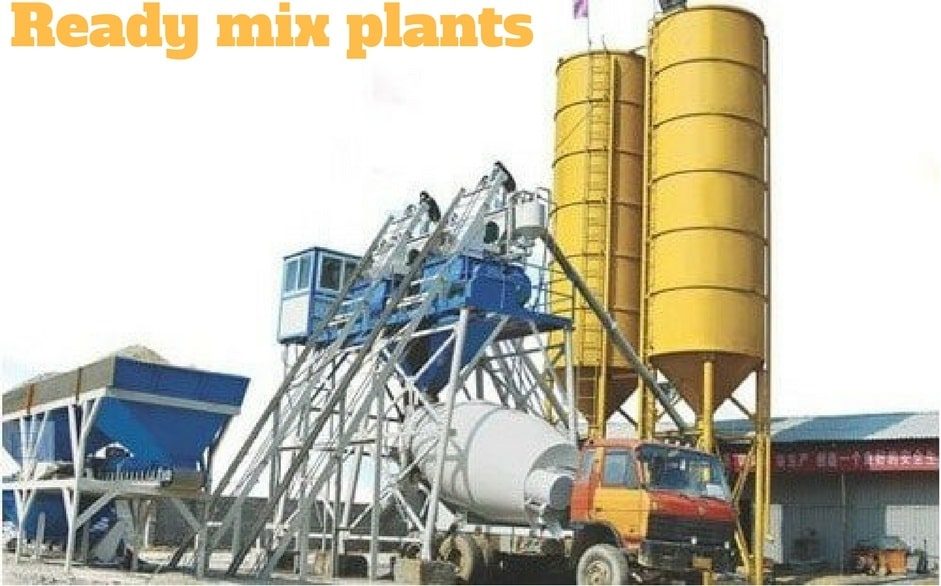
In a ready-mix plant (transit mix), dry or partially mixed materials are loaded into a transit mixer truck. The truck drum adds water and mixes the concrete during transport to the site. The final mix is completed in the truck rather than at the plant. This is the most common configuration for urban construction where plants serve multiple sites from a central location.
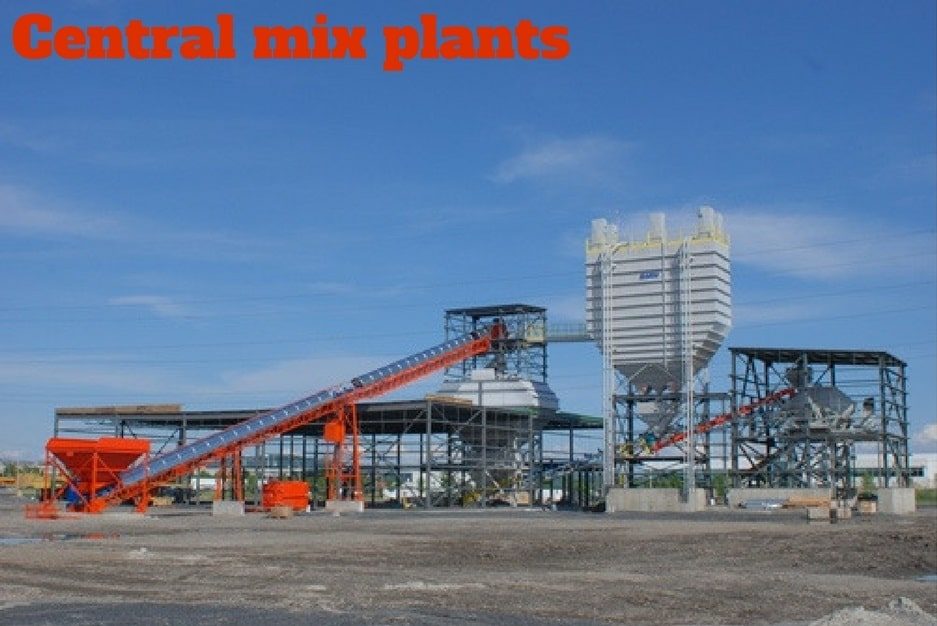
In a central mix plant, all materials — including water — are fully mixed at the plant before loading into the truck. The transit mixer keeps the concrete agitated during transport but does not mix it. Central mix plants produce more consistent concrete because mixing conditions are fully controlled at the plant. For projects requiring tight strength consistency — NHAI highway concrete, bridge decks, and high-rise foundations — central mix plants are generally preferred where the haul distance from plant to site allows it.
Frequently Asked Questions — Concrete Batching Plant Working Process
How does a concrete batching plant work step by step?
A concrete batching plant works in five steps: (1) raw materials — aggregates, cement, water, admixtures — are stored separately; (2) each material is weighed to the exact target mass using load cells and a PLC control system; (3) weighed aggregates are conveyed to the mixer by belt or skip hoist; (4) all materials are mixed for 30–90 seconds to a uniform consistency; (5) finished concrete is discharged into a transit mixer truck or directly into formwork. The complete cycle takes 60–120 seconds per batch.
What is the working principle of a concrete batching plant?
The working principle is gravimetric batching — each raw material is weighed individually to a target mass using load cells before being combined in the mixer. A PLC control system monitors each load cell in real time, stops the material feed the instant the target weight is reached, and logs every batch measurement. This closed-loop system meets IS 4926:2003 tolerance requirements (±3% aggregates, ±2% cement and water) and eliminates the human error of manual mixing.
How long does one batch cycle take in a concrete batching plant?
A complete batch cycle typically takes 60 to 120 seconds on a modern automated plant. At a 90-second cycle time with a 1.5 cubic metre batch, a plant can theoretically produce 60 cubic metres per hour. In practice, accounting for transit mixer positioning, cleaning, and operational pauses, most plants achieve 70 to 85% of their theoretical maximum output during a working shift.
What materials are mixed in a concrete batching plant?
A concrete batching plant mixes cement, coarse aggregates (crushed stone), fine aggregates (sand), water, and chemical admixtures (plasticisers, retarders, accelerators). On some projects, supplementary cementitious materials like fly ash, GGBS, or micro-silica are added as partial cement replacements to modify concrete properties. The specific combination and proportions are defined by the project’s approved mix design, which may specify concrete grades from M20 to M60 or higher for infrastructure work.
Can a concrete batching plant produce different concrete grades?
Yes. A properly configured concrete batching plant can produce multiple concrete grades — M20, M25, M30, M40, or higher — by storing different mix designs in the PLC control system and selecting the correct recipe for each pour. This flexibility is essential for road and infrastructure projects where different structural elements (road slabs, bridge decks, drainage structures) require different concrete grades within the same project.
How should a concrete batching plant be maintained to ensure consistent output?
Regular maintenance focuses on three areas: cleaning (mixer, discharge gate, and conveyor after each shift to prevent concrete buildup), calibration (load cells, water meters, and admixture dosers checked against known values at defined intervals), and mechanical inspection (belt conveyors, screw conveyors, mixer blades, and silo discharge systems). For a detailed maintenance schedule, refer to our complete maintenance guide for mobile concrete batching plants.
Get a Quote for KEW Mobile Concrete Batching Plant
Kaushik Engineering Works manufactures and supplies mobile concrete batching plants for road construction, bridge projects, and general infrastructure across India and 35+ export markets. Our plants are available in wet and dry configurations, with PLC-based control systems and full commissioning support from our Sanand, Ahmedabad facility.
Whether you are evaluating a mobile batching plant for a specific project or comparing configurations for your contractor fleet, our team can help you select the right capacity, mixer type, and setup for your requirements. Contact us or visit our mobile concrete batching plant page for full technical specifications.
Phone: +91 98251 64764 | +91 2717 415587
Email: info@kaushikengineeringworks.com
Address: PE-107, Sanand II Industrial Estate, Bol GIDC, Sanand, Ahmedabad – 382110, Gujarat, India
Hours: Mon–Sat: 8:00 AM – 7:00 PM IST

