
The road construction industry is racing against time. Every project has a strict deadline and a tighter budget. In this high-pressure environment, your equipment is your biggest asset. The most critical piece of this puzzle is undoubtedly the mobile asphalt plant. It serves as the heart of your paving operation. If the heart beats too slowly, the project is delayed. If it beats too fast without rhythm, you waste energy and money.
Choosing the right plant is not just about picking a machine from a catalogue. It is a strategic business decision. The capacity of the plant dictates your daily output, your fuel consumption, and your profit margins. Many contractors make the mistake of buying the biggest plant they can afford. They believe that extra capacity is a safety net. This is often a costly error. Others buy a small plant to save money upfront. They end up paying double in penalties for delayed project completion.
How do you find the perfect balance? How do you select a machine that fits your current projects and allows for future growth?
At Kaushik Engineering Works, we have decades of experience helping contractors solve this exact problem. We understand that every site is unique. We know that a one-size-fits-all approach does not work in road construction. This guide will walk you through every technical and practical aspect of selecting the right capacity. We will look at the math, the logistics, and the engineering behind the decision.
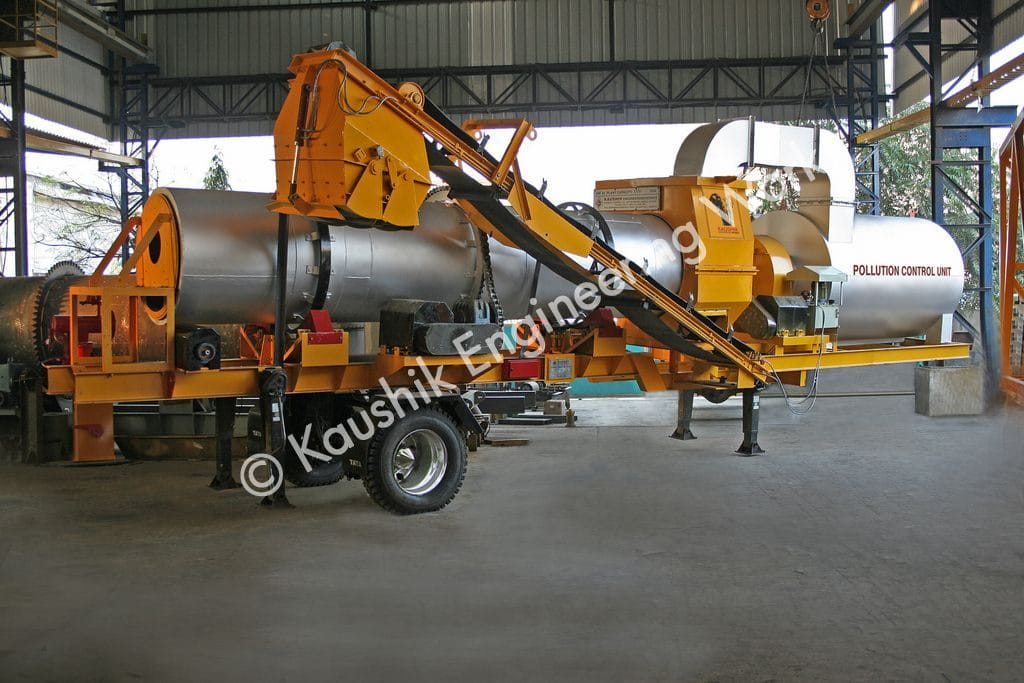
The Basics of Plant Capacity
Capacity in the context of a mobile asphalt plant is measured in TPH. This stands for Tons Per Hour. It represents the maximum amount of hot mix asphalt the plant can produce under ideal conditions.
However, ideal conditions rarely exist on a job site. Factors like moisture content in aggregates, ambient temperature, and altitude affect actual output. A plant rated for 100 TPH might produce 85 TPH if your aggregates are wet. Therefore, understanding the rating is the first step.
You must also understand that a mobile asphalt plant is part of a chain. It sits between your aggregate supply and your paving fleet. Its capacity must match the speed of your paver and the number of trucks you own. If you buy a high-capacity plant but have a slow paver, the plant will have to stop frequently. This start-stop operation is bad for the machinery. It causes wear on the burner and motor. It also leads to an inconsistent mix of temperatures.
Selecting the right capacity requires a mix of calculation and foresight. You need to look at your current contracts. You also need to look at where your business is heading in the next five years.
The Mathematical Approach to Calculating Capacity
Do not rely on guesswork when investing in heavy machinery. You can calculate the exact requirement for your project using a simple logical flow.
Step 1: Calculating Total Mix Requirement
First, determine the total volume of asphalt needed for your road. You need the length, width, and thickness of the layer you are paving. Let us assume you have a contract to pave a 10 km stretch. The road spans a width of 7 meters. The thickness of the paving layer is 50 millimetres (0.05 meters). The standard density of hot mix asphalt is roughly 2.4 tons per cubic meter.
The Formula: Total Tons = Length x Width x Thickness x Density
The Calculation: Total Tons = 10,000 meters x 7 meters x 0.05 meters x 2.4 Total Tons = 8,400 Tons
Step 2: Determining the Time Frame
Now you must look at your deadline. Let us say you have 20 working days to complete this paving work. You plan to work for 8 hours each day. Total Working Hours = 20 days x 8 hours = 160 Hours.
Step 3 is Finding the Required TPH
Now divide the total tons by the total hours. Required TPH = 8,400 Tons / 160 Hours. Required TPH = 52.5 Tons Per Hour.
The Verdict
In this scenario, you need a plant that can consistently deliver around 53 tons every hour. A mobile asphalt plant with a capacity of 40-60 TPH would be the ideal choice. It offers a slight buffer above your requirement. This ensures you can meet the target even if you lose an hour to maintenance or logistics issues.
Detailed Breakdown of Capacity Ranges
At Kaushik Engineering Works, we offer the MDM (Mobile) series. This series is designed to cover the diverse needs of the road construction industry. We offer capacities ranging from 20 to 120 TPH output in different models. Let us analyse which capacity range suits which type of contractor.
The 20 to 30 TPH Range
This is the entry-level segment. It is compact, highly mobile, and cost-effective.
Ideal For:
- Rural Roads: These projects often happen in remote villages. Access roads are narrow. Large trailers cannot reach these sites. A smaller plant is easier to tow.
- Maintenance Work: Patching potholes or resurfacing small sections of city roads does not require a massive output.
- Hilly Terrain: In mountain regions, flat land is scarce. You need a plant with a small footprint. A 20-30 TPH mobile asphalt plant fits easily on small terraces carved into hillsides.
Key Benefit: The fuel consumption is very low. You do not need to heat a massive drum for a small amount of mix. This makes it profitable even for small contracts.
The 40 to 60 TPH Range
This is the most popular category for mid-sized contractors. It offers a balance between portability and productivity.
Ideal For:
- District Roads: These are the arteries connecting towns. They require decent quality and speed.
- State Highways (Widening): Many projects involve adding a lane to an existing road. The daily requirement is moderate.
- Industrial Parks: Paving internal roads for factories or large residential complexes.
Key Benefit: This size matches well with standard pavers and dump trucks. It allows for continuous operation without requiring a massive fleet of logistics vehicles.
The 60 to 90 TPH Range
This capacity puts you in the league of major infrastructure players. You are looking at serious daily output.
Ideal For:
- National Highways: These projects have strict deadlines and heavy penalties for delay. You need reliable, high-volume production.
- Urban Arterials: Paving main city roads often happens at night. You have a short window of 6-8 hours to pave a long stretch and reopen it for traffic. Speed is everything here.
Key Benefit: Our plants in this range come with advanced automation. This ensures that even at high speeds, the quality of the mix remains consistent.
The 90 to 120 TPH Range
This is the heavyweight category. It is designed for mega-projects where the paver never stops.
Ideal For:
- Expressways: These are multi-lane, high-speed corridors. The consumption of asphalt is massive.
- Airport Runways: These projects demand the highest output and the highest quality control.
Key Benefit: This plant is a powerhouse. It allows you to complete kilometres of road in a single day. However, it requires a robust supply chain of aggregates and bitumen to keep it fed.
The Impact of Capacity on Fuel Efficiency
Fuel is the highest recurring cost in running a mobile asphalt plant. Your choice of capacity has a direct impact on your fuel bill.
Imagine buying a 120 TPH plant for a project that only needs 40 TPH. You will have to run the burner at a lower setting. However, industrial burners have an optimal operating range. Running them too low can lead to incomplete combustion. This wastes fuel and creates soot.
Alternatively, you might run the plant at full speed for 20 minutes and then stop for 40 minutes. This thermal cycling is inefficient. Heating the drum and then letting it cool down repeatedly consumes more energy than maintaining a constant temperature.
Our MDM series plants are designed and engineered to give trouble-free performance with superior fuel efficiency. When you choose the right capacity, you can run the plant continuously. This steady state is where the burner is most efficient. The heat transfer to the aggregates is optimal. The exhaust temperature is stable. This results in the lowest fuel cost per ton of mix produced.
Matching Capacity with Auxiliary Equipment
Your mobile asphalt plant does not work in isolation. It is part of a team. The capacity of the team is limited by its weakest link.
The Truck Fleet
A 100 TPH plant produces roughly 1.6 tons of mix per minute. A standard dump truck holds about 15 tons. This means you fill a truck every 10 minutes. If the paving site is 30 minutes away, the round trip is one hour. To keep the plant running continuously, you would need at least 6 to 7 trucks. If you only have 3 trucks, your expensive plant will sit idle half the time. You must factor in the cost of hiring or buying extra trucks when upgrading to a higher capacity.
The Paver Speed
Pavers have a maximum laying speed. If your plant produces mix faster than the paver can lay it, trucks will queue up at the site. The mix will cool down in the trucks. This affects the compaction quality. Conversely, if the plant is too slow, the paver has to stop and wait. This is a quality nightmare. Every time a paver stops, the screed settles on the hot mat. This creates a bump or a mark on the road surface. Ideally, the paver should move non-stop at a constant speed. The right plant capacity makes this possible.
Importance of M.O.R.T.H. Compliance
In India, the quality of road construction is governed by the Ministry of Road Transport and Highways. This is commonly known as M.O.R.T.H. (previously known as M.O.S.T.).
These specifications dictate everything from the temperature of the mix to the gradation of aggregates. They also set strict norms for pollution control. Whether you buy a 20 TPH plant or a 120 TPH plant, compliance is non-negotiable. A high-capacity plant that produces a segregated mix is useless. Environmental authorities will shut down a low-capacity plant that emits black smoke.
At Kaushik Engineering Works, all our plants are compliant with the latest M.O.R.T.H. specifications. Our design team focuses on:
- Accurate Weighing: Ensuring the correct proportion of bitumen and aggregates.
- Temperature Control: Keeping the mix within the specified range to prevent overheating or underheating.
- Pollution Control: Using efficient baghouse filters or wet scrubbers to meet emission norms.
This compliance ensures that the government departments clear your bills without hassle. It protects your reputation as a quality contractor.
Future-Proofing Your Investment
A mobile asphalt plant is a long-term asset. You will likely use it for 10 to 15 years. Therefore, you should not just look at today’s project. You must look at tomorrow’s opportunities.
If you are currently doing village roads but plan to bid for state highways next year, buying a 20 TPH plant might be short-sighted. You might outgrow it in a year. In such a case, stretching your budget for a 40-60 TPH model might be a smarter move.
However, do not go overboard. Buying a 120 TPH plant just in case you get a big project is risky. The capital cost is higher. The mobilisation cost is higher. The maintenance cost is higher. The key is to find a balance. Look for a plant that covers 80% of your potential projects comfortably. For the remaining 20% of very large projects, you can always rent a second plant or collaborate with another contractor.
Customisation and Flexibility
Standard models are great, but sometimes you need something specific. The “Mobile” aspect of our plants adds a layer of complexity. Site conditions vary wildly. Some sites are long and narrow. Others are irregularly shaped.
Kaushik Engineering Works understands this. We specialize in engineering customized asphalt plants tailored to address unique site constraints and operational needs. We can customise:
- Cold Feed Bins: We can change the number and capacity of bins based on the number of aggregate sizes you use.
- Bitumen Storage: We can offer mobile bitumen tanks with different heating options.
- Layout: We can adjust the layout of the plant to fit into tight spaces without compromising safety or efficiency.
This ability to customise allows you to get the maximum productivity out of your chosen capacity. You are not forced to adapt your operations to the machine. The machine adapts to you.
The Role of Automation in Capacity
Higher capacity plants require faster reaction times. A human operator cannot manually adjust the burner and the bitumen valve fast enough for a 120 TPH plant. A split-second delay can ruin tons of mix.
This is why our MDM (Mobile) series offers customers the industry’s finest and proven technical solution. We integrate the latest generation process controls and automation. This automation ensures:
- Precision: The bitumen content is accurate to the last decimal point.
- Consistency: Every batch looks and performs exactly like the previous one.
- Safety: The system automatically detects faults and shuts down unsafe operations.
Automation helps you utilise the full capacity of the plant. A manual plant often runs below its rated capacity because the operator plays it safe. An automated plant runs at optimal efficiency comfortably.
Site Support and Installation
Buying the plant is only half the battle. You need to get it running. A mobile asphalt plant is a complex assembly of mechanical and electrical systems. Moving it from one site to another requires skill. Disassembling the components, transporting them, and reassembling them takes time. Every day spent in shifting is a day of lost production.
This is where the manufacturer’s support becomes critical. You need a partner who does not just sell and disappear. You need total installation and site support. Kaushik Engineering Works provides targeted support to deliver precisely mixed quality asphalt productively and profitably. Our team helps you set up the plant quickly. We calibrate the systems. We train your operators. This ensures that when you hit the start button, the plant delivers its rated capacity immediately.
Get Expert Guidance from Leading Construction Equipment Manufacturers
As one of the industry’s most innovative construction equipment manufacturers, Kaushik Engineering Works ensures you get unmatched product refinement and fuel efficiency. Whether you need a nimble 20 TPH unit or a robust 120 TPH plant, trust our expertise to help you build the roads of tomorrow.
Contact Us:
- Phone: +91-9825164764 / +91-2717415587
- Email: info@kaushikengineeringworks.com

