
Infrastructure development across India is accelerating at an unprecedented pace. Tight project timelines and strict government quality mandates leave zero margin for operational errors.
For road contractors and highway developers, the choice of machinery dictates project profitability. Continuing to run older equipment silently destroys your profit margins through fuel waste and frequent breakdowns.
Upgrading to modern automation is no longer just an environmental choice. It is a strict financial necessity to safeguard your bottom line in 2026.
What Is the ROI of a Smart Asphalt Mixing Plant?
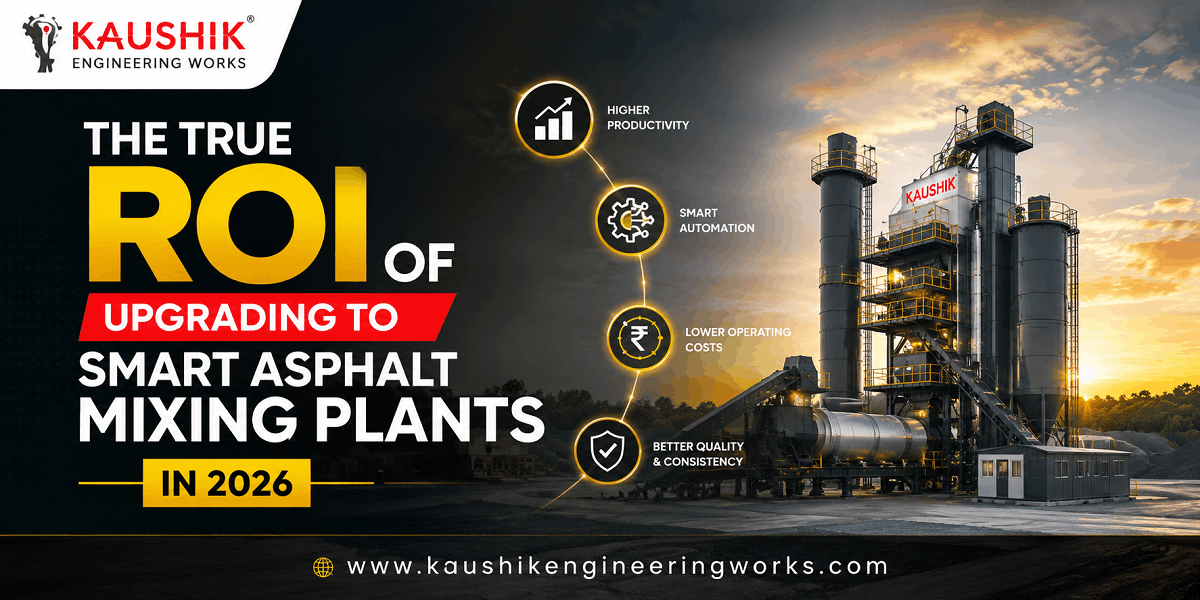
The return on investment (ROI) of upgrading to a smart asphalt mixing plant typically ranges between 18 and 24 months for mid-to-large-scale highway projects. Financial returns are realised through a 15% reduction in fuel consumption, a 10% savings on raw aggregates via precise automated weighing, and a 25% drop in unexpected downtime through predictive maintenance alerts. These factors combined allow infrastructure firms to significantly lower their cost per ton of produced mix.
Why Legacy Systems Drain Your Construction Budget
Operating outdated equipment creates a continuous drain on your company’s resources. Many contractors look only at the initial purchase cost of a machine while ignoring daily operating losses.
In 2025, many firms faced severe project delays simply because their older machinery could not keep up with continuous production demands. We must learn from those operational bottlenecks.
Let us explore how outdated asphalt mixing plants leak money from your daily operations.
1. The Hidden Costs Of Manual Calibration
Manual calibration relies heavily on operator guesswork and mechanical linkages. Slight errors in aggregate proportioning cause weak asphalt mixes that fail road authority inspections.
When a batch fails quality tests, you lose the cost of the expensive bitumen and the aggregates. You also waste the fuel spent heating those materials to optimal temperatures.
Repeated manual adjustments cause massive material waste over a single construction season. This hidden waste directly reduces the overall profitability of your highway contracts.
2. How Unexpected Downtime Kills Project Timelines
Older asphalt batch plants lack early warning tracking systems. Component failures happen abruptly and stop your entire site’s operations immediately.
When a plant stops running, your road pavers and soil compactors sit idle on the job site. You still have to pay the hourly wages for those standby crews.
Delayed projects also attract heavy financial penalties from government road authorities. A single major breakdown can erase the profits of an entire project phase.
3. Fuel Waste in Traditional Heat Drums
Fuel is the single largest operating expense for any road construction machine. Traditional heating drums lack proper thermal insulation and efficient burner controls.
Heat escapes continuously into the atmosphere and requires more fuel to maintain the required mix temperatures. Older burners also struggle to adapt to changing moisture levels in their aggregate stockpiles.
This thermal inefficiency drastically increases your production cost per ton. With fluctuating global fuel prices, this waste makes your project bids far less competitive.
Financial Benefits of Next-Generation Plant Automation
Investing in smart asphalt mixing plants changes how you manage your project expenses. Automation replaces human error with mathematical precision at every stage of production.
Modern machinery protects your raw materials and maximises output. Here is how modern asphalt mixing plants deliver immediate financial relief.
1. Predictable Maintenance Cycles Save Cash
Modern smart systems monitor component wear in real time. Sensors track bearing temperatures, motor loads, and vibration levels across the entire facility.
The software alerts your maintenance team long before a critical component actually fails. This early warning allows you to schedule repairs during planned shift breaks rather than peak hours.
Preventing catastrophic failures extends the operational life of your screen decks and mixing paddles. Your team spends less time fixing emergencies and more time managing profitable production.
2. Exact Material Weigh Mechanisms Prevent Aggregate Waste
Smart plants feature advanced load cells linked directly to computerised batching software. The system measures every kilogram of aggregate, sand, and bitumen with absolute accuracy.
This automated precision ensures the final mix matches your job mix formula every single time. It eliminates the costly problem of over-bitumen or under-bitumen batches.
Saving even a small percentage of bitumen yields massive financial savings over a quarter. Because bitumen is highly expensive, precise control drops your raw material costs rapidly.
3. Lower Fuel Consumption Directly Impacts the Bottom Line
Next-generation burners automatically adjust their flame intensity based on the real-time moisture of the incoming stone aggregates. Insulated drying drums trap heat efficiently to maximise energy transfer to the stones.
Variable Frequency Drives (VFDs) on the exhaust fans also adjust power consumption based on draft requirements. This optimised heating process significantly reduces the litres of fuel needed per ton of asphalt.
Lower fuel usage means a smaller carbon footprint and much lower daily production costs. These savings give you a distinct edge when bidding for high-volume national highway projects.
4. Reduced Labour Requirements Lower Monthly Operational Bills
Automated control systems allow a single qualified operator to manage the entire mixing process from a central cabin. The software handles material feeding, temperature control, and batch discharging automatically.
You no longer need multiple manual spotters monitoring different sections of the facility. This optimisation lets you deploy your skilled labour to other critical areas of the construction site.
Fewer manual interventions also lower the risk of workplace accidents around heavy machinery. Overall site safety improves alongside your daily operational efficiency.
Real World Payback Scenarios for Local Contractors
Let us look at how these financial dynamics play out across different regions. Regional climate variations and specific project types influence how fast a smart machine pays for itself.
Smart asphalt mixing plants adapt to local constraints to protect your investment.
1. High-Volume Highway Projects in India
In India, the National Highways Authority of India (NHAI) enforces strict compliance regarding mix temperature and pavement material layout. Advanced asphalt mixing plants ensure your production consistently meets these high regulatory standards.
By preventing failed mixes, you ensure a steady, uninterrupted flow of hot asphalt directly to your paving crews. This steady workflow helps you complete projects ahead of schedule.
Completing road stretches early often unlocks early completion bonuses from government bodies. It also frees up your machinery to move on to the next profitable contract faster.
2. Desert Climate Considerations for Equipment Lifespan
Contractors in the Middle East face extreme ambient temperatures that put heavy stress on mechanical components. Heat affects bitumen viscosity and electronics simultaneously.
Smart plants designed for these zones feature specialised heavy-duty cooling units for their electrical control systems. Thermal tracking prevents PLC panels from overheating during intense summer daytime shifts.
This regional adaptation keeps your production line running when traditional plants are forced to shut down. You maintain your daily output targets despite the severe weather conditions.
Calculate the Payback Period for Your Business
To truly understand the value of modern asphalt mixing plants, you must evaluate your capital expenditure against long-term operational savings. CFOs require hard data to approve equipment upgrades.
Below is a realistic financial comparison based on standard project operations. We compare a legacy system against a modern automated facility.
|
Operational Expense Category |
Traditional Plant Cost Structure | Smart Plant Cost Structure |
Annual Savings Generated |
| Average Fuel Consumption | 7.5 Liters per ton | 6.2 Liters per ton | Approx. ₹35,00,000 / $42,000 |
| Material Waste (Bitumen/Aggregate) | 2.5% Average waste | Less than 0.5% waste | Approx. ₹48,00,000 / $57,000 |
| Unplanned Site Downtime | 120 Hours annually | Less than 20 Hours annually | Approx. ₹22,00,000 / $26,000 |
| Manual Labor Requirements | 5 Operators per shift | 2 Operators per shift | Approx. ₹12,00,000 / $14,000 |
Note: These figures are realistic estimates based on an annual production volume of 1,00,000 tons of hot mix asphalt under standard working conditions.
When you add these annual operational savings together, the initial higher cost of an automated plant is covered quickly. The massive reduction in bitumen waste alone drives the bulk of the ROI.
Most infrastructure firms recover the extra capital investment within their first two major road contracts. After the payback period ends, those savings convert directly into pure company profit.
Essential Smart Features That Guarantee a Faster ROI
Not all road construction machinery offers the same level of financial return. When evaluating options from various asphalt suppliers, you must look for specific high-performance engineering features.
Investing in the right technology ensures your plant remains viable for the next decade. Here are the core features that define a truly smart asphalt mixing plant.
1. PLC-Based Control Panels Ensure Absolute Precision
A Programmable Logic Controller (PLC) serves as the digital brain of modern asphalt mixing plants. The panel features a user-friendly touch interface that displays real-time material flow and system faults.
The system stores multiple mix designs in its memory bank. This allows you to switch between different project specifications instantly without manual recalibration.
This flexibility cuts down setup times drastically when changing between binder courses and wearing courses. Your plant stays productive instead of pausing for manual adjustments.
2. Remote Access Systems Keep Off-Site Managers Informed
Smart plants use cellular or satellite connectivity to transmit production data directly to secure cloud servers. Company executives and project managers can view live output reports from their smartphones.
This remote visibility allows you to monitor fuel efficiency and material usage from anywhere in the world. You can identify operational bottlenecks without needing to be physically present at the dusty project site.
Daily automated reports help procurement teams order raw materials exactly when needed. This prevents excess capital from being tied up in massive aggregate stockpiles.
3. Advanced Burner Technology Reduces Fuel Consumption
High-efficiency burners handle multiple fuel options easily. You can seamlessly switch between light diesel oil, heavy fuel oil, and natural gas.
This fuel flexibility allows you to select the cheapest available fuel source in your specific project region. The automated burner modulation maintains the aggregate temperature within a tight two-degree window.
Precise heat control prevents the expensive bitumen from burning or cooling down too much during the mixing cycle. The result is a perfect batch of asphalt at the absolute lowest fuel cost possible.
Common Objections to Modernisation and the Reality
Many construction firms hesitate to upgrade their road manufacturing setups due to common industry misconceptions. Let us analyse these hesitations against actual field performance data.
Relying on outdated assumptions keeps your business from reaching its true earning potential.
1. Initial Capital Expenditure Fears
Large initial investments for modernized machinery often make cautious accounting teams hesitate. However, looking only at the purchase price is a fundamentally flawed procurement strategy.
A cheaper manual machine will quickly cost you much more through high fuel usage and daily material waste. The smart machine pays back its price difference rapidly through lower daily operating costs.
In modern competitive bidding, the contractor with the lowest operating cost wins the tender. Smart asphalt mixing plants give you that competitive pricing advantage.
2. The Learning Curve for New Software
Some owners worry that their current site crew will struggle to operate computerised control cabins. They fear the transition will cause massive production delays.
Modern industrial software is designed with highly visual interfaces that resemble everyday consumer tablet applications. The controls are intuitive and rely on clear graphical icons.
Leading manufacturers provide comprehensive on-site training for your operators during the commissioning phase. Most experienced crews learn to run automated systems confidently within just a few days of hands-on practice.
Is It Time to Modernise Your Highway Projects?
The road construction market is becoming highly competitive across developing nations. Clients demand better pavement durability alongside shorter project timelines and complete environmental compliance.
Continuing to rely on outdated equipment limits your business growth and reduces your profit margins. Upgrading to advanced asphalt mixing plants positions your company as a preferred contractor for premium infrastructure projects.
Kaushik Engineering Works designs high-performance road construction equipment tailored for tough working conditions. Our automated plants deliver maximum fuel efficiency, absolute mix accuracy, and rugged reliability.
Get in touch with our engineering team today at +91 2717 415587 or email us at info@kaushikengineeringworks.com to review your project requirements. Let us help you calculate the precise financial return an automated system will bring to your construction business.

