
Concrete batching equipment is the cornerstone of any large construction project. From roads and highways to skyscrapers and bridges, these plants are essential for producing the high-quality concrete needed to meet modern construction standards. In India, where infrastructure projects are growing at an unprecedented rate, understanding the legal requirements for concrete batching equipment is crucial for plant owners, contractors, and other stakeholders in the construction industry.
This blog aims to provide a comprehensive guide to the legal requirements for concrete batching equipment in India. It will cover everything from environmental clearances and licensing to worker safety regulations, quality standards, and other essential legal aspects. Understanding and complying with these legal requirements not only ensures smooth operations but also protects workers, minimises environmental impacts, and ensures the production of high-quality concrete.
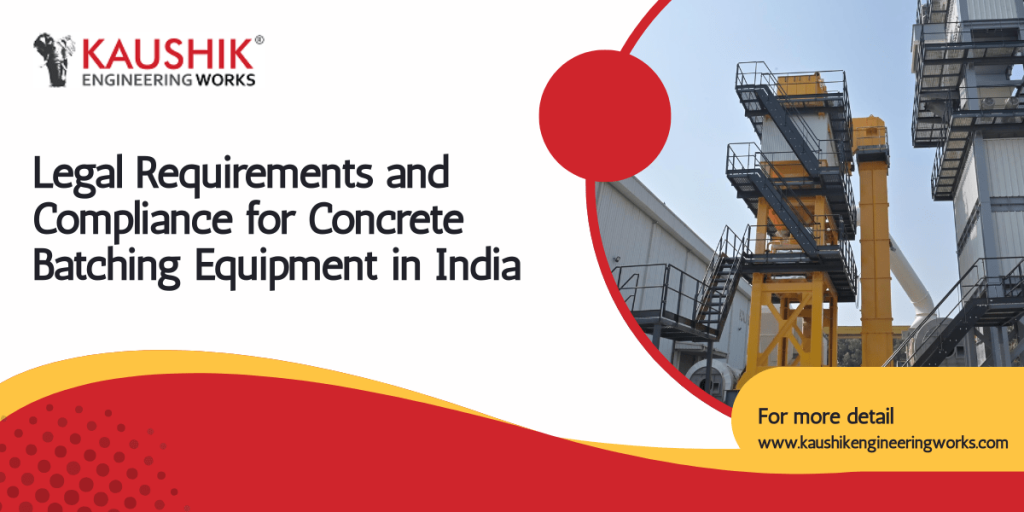
The Importance of Legal Compliance for Concrete Batching Equipment
When it comes to concrete batching equipment, the importance of adhering to legal requirements cannot be overstated. Whether you are investing in a ready-mixed concrete batching plant or a mobile batching plant, compliance with local laws and standards is critical for several reasons. First, non-compliance can result in substantial fines or shutdown orders from regulatory authorities. Second, operating in a legally compliant manner reduces risks related to worker safety, environmental pollution, and equipment failure.
As India continues to experience rapid infrastructure growth, more contractors and construction companies are turning to concrete batching equipment for large-scale projects. This has led to stricter government regulations, ensuring that these plants meet environmental standards, worker safety protocols, and industry norms. Understanding the various legalities involved will help contractors, plant owners, and operators make informed decisions and operate their concrete batching equipment efficiently and legally.
In the following sections, we will break down the essential legal requirements related to concrete batching equipment in India, including obtaining environmental clearances, factory licenses, labour law compliance, adherence to Indian Standards, and more.
Regulatory and Environmental Clearances
Environmental Clearance for Concrete Batching Equipment
One of the first legal hurdles that needs to be addressed when setting up concrete batching equipment is obtaining the necessary environmental clearances. Given the significant environmental impact of concrete production, including dust generation, water consumption, and chemical use, these plants are subject to rigorous scrutiny from environmental authorities.
In India, a ready-mixed concrete batching plant or any other concrete production facility needs to acquire an Environmental Clearance (EC) before setting up operations. This clearance is granted by the Ministry of Environment, Forest, and Climate Change (MoEFCC) or the relevant State Pollution Control Board (SPCB), depending on the plant’s capacity, location, and environmental impact.
The process of obtaining environmental clearance typically involves an Environmental Impact Assessment (EIA) report that evaluates how the batching plant will affect the surrounding environment. This report must address factors such as air quality, water usage, waste management, noise levels, and traffic management.
Additionally, the plant must comply with various pollution control measures, including dust suppression systems, water recycling for concrete mixing, and waste management. The plant may be required to install systems such as bag filters, water sprinklers, and settling tanks to minimise the release of pollutants. Failure to comply with these environmental standards can lead to hefty fines, legal action, or even the closure of the plant.
Pollution Control Measures and Regulatory Compliance
Managing the environmental impact of concrete batching equipment is a critical part of its legal compliance. Pollution control is primarily focused on:
- Air Quality Management: Dust generated during the batching process can significantly affect the surrounding environment. Dust control systems such as baghouses, cyclones, or wet dust suppression systems are essential in mitigating air pollution.
- Wastewater Treatment: Concrete production requires large amounts of water, and wastewater generated during the mixing and cleaning processes must be treated before disposal. The plant should have a proper water management system to ensure that water used in operations is either recycled or treated to meet local environmental regulations.
- Noise Pollution: As concrete batching equipment often operates continuously, noise levels can be high. Therefore, measures such as acoustic enclosures, low-noise motors, and sound barriers should be in place to comply with noise control standards.
In urban areas or environmentally sensitive zones, obtaining pollution-related clearances can take time. Ensuring that your concrete batching equipment meets these standards before operation begins is essential to avoid delays or penalties.
Licensing and Factory Compliance
Factory License for Concrete Batching Equipment
Under the Factories Act, 1948, any industrial unit with 10 or more workers using power, or 20 or more workers without power, must register as a factory and obtain a factory license. Since most concrete batching equipment involves power-driven machinery and employs a workforce larger than the statutory threshold, it is subject to the provisions of this Act.
This license is issued by the state’s Factory Inspectorate Department and ensures that the plant complies with health, safety, and welfare provisions for its workers. The requirements include:
- Health and Safety Provisions: Ensuring that all workers have access to proper sanitation facilities, ventilation, and safety equipment.
- Fire Safety Measures: The factory must have a fire safety plan, including fire extinguishers, fire exits, and emergency protocols in place.
- Machine Safety: The concrete batching equipment must be equipped with safety mechanisms to prevent accidents. For instance, automated shut-off systems in case of malfunction, safety guards on moving parts, and emergency stop buttons should be standard.
By complying with the Factories Act, 1948, the plant owner ensures a safer working environment, which also improves worker morale and reduces the risk of work-related injuries.
Registration with the Factory Inspectorate Department
Before the concrete batching equipment starts operating, the plant owner must notify the Chief Inspector of Factories in the state. This registration must include details about the type of batching plant, the number of employees, the machinery in use, and the safety features that have been implemented. Upon registration, the factory will be inspected by the Factory Inspector to ensure compliance with various health, safety, and environmental regulations.
Failure to obtain this registration can lead to penalties, suspension of operations, or legal challenges.
Labour Laws and Worker Welfare
In addition to the Factory License, concrete batching plants must adhere to various labour laws, including the Building and Other Construction Workers (BOCW) Act, 1996. This law mandates the welfare of workers engaged in construction activities, including those working with concrete.
Key provisions under the BOCW Act include:
- Health and Safety: Ensuring that workers are provided with safety gear such as helmets, gloves, and ear protection when operating machinery like concrete batching equipment.
- Wages and Compensation: Workers should receive fair wages according to labour laws, and the plant owner must maintain accurate records of working hours, overtime, and wages paid.
- Accident Records: Any workplace accidents, injuries, or fatalities must be documented, and appropriate compensation must be provided.
By ensuring compliance with these labour laws, concrete batching plant owners not only avoid legal troubles but also protect the rights and safety of their workforce.
Adherence to Indian Standards (IS)
Compliance with IS 4925 for Concrete Batching Equipment
One of the most crucial compliance aspects for any concrete batching equipment in India is adherence to IS 4925, which is the Indian standard for concrete batching plants. IS 4925 specifies the requirements for batching plants, including design, construction, operation, and maintenance guidelines.
This standard ensures that the concrete batching equipment produces concrete that is consistent, high-quality, and suitable for use in large-scale infrastructure projects. Key components outlined by IS 4925 include:
- Batching and Mixing Accuracy: It ensures that all components (cement, water, aggregates) are precisely measured and mixed according to the required specifications, resulting in high-quality concrete.
- Structural Design: The concrete batching equipment must be designed to handle the expected workload, with adequate space for storage of aggregates and additives.
- Automation and Safety: The plant should include automated features to ensure precise operations, with clear safety protocols for the protection of workers and the environment.
Following IS 4925 helps in ensuring that the concrete batching equipment operates safely and efficiently, thus preventing accidents and operational inefficiencies.
Other Relevant IS Standards for Concrete Batching Equipment
In addition to IS 4925, there are several other Indian Standards that may apply depending on the specific application and type of concrete produced:
- IS 456: This standard governs the design and construction of concrete structures, guiding strength, durability, and mix ratios.
- IS 3370: Relevant for plants producing concrete for water-retaining structures, this standard ensures the mix and design of concrete can withstand the conditions present in such structures.
By adhering to these standards, concrete batching equipment can produce concrete that meets regulatory requirements for structural integrity and durability.
Local Infrastructure and Zoning Approvals
Land Use and Zoning Approvals
Before setting up any concrete batching equipment, plant owners must ensure that the land is zoned for industrial or commercial use. The local municipal authority or urban development authority will need to approve the land usage. Zoning laws help ensure that the plant is situated in a location where it won’t cause undue disruption to residential or sensitive areas.
If the land is not zoned for industrial use, the plant owner will need to apply for land-use conversion. The process may involve public hearings, environmental assessments, and approval from local urban planning authorities.
Utility Connections and Local Approvals
Concrete batching plants require reliable access to utilities such as water and electricity. These connections must be approved by local utility providers, and the plant must demonstrate that its operations will not negatively impact the local infrastructure.
Additionally, local authorities may require permits for wastewater disposal or stormwater management. All these local clearances ensure that the concrete batching equipment operates without causing environmental or public health issues.
Conclusion
Operating concrete batching equipment in India is a highly regulated process. Whether you are setting up a ready-mixed concrete batching plant or opting for a mobile batching plant, ensuring that your plant meets all the legal requirements is critical to its long-term success and smooth operation.
From obtaining environmental clearances and factory licenses to complying with safety and labour laws, the legal landscape for concrete batching plants is extensive. By following these regulations, you not only protect your business from legal repercussions but also ensure that your concrete batching equipment operates efficiently and sustainably.
Adhering to standards such as IS 4925 and maintaining pollution control systems can enhance the quality of concrete production and safeguard the health of your workers and the surrounding environment. Legal compliance should be viewed not just as a mandatory requirement, but as an opportunity to improve safety, quality, and overall operational efficiency.
By focusing on compliance, safety, and quality, concrete batching equipment owners can contribute to India’s infrastructure development in a responsible, sustainable, and legally sound manner.
Frequently Asked Questions
1. What are the key benefits of using a mobile concrete batching plant?
Mobile concrete batching plants offer flexibility and mobility, allowing for faster setup and operations at remote or temporary construction sites. They are perfect for small to medium-sized projects, reducing transportation costs and minimising environmental impact while delivering high-quality concrete.
2. How often should concrete batching equipment be inspected for safety?
Regular inspections should be conducted quarterly, with more frequent checks during peak operational periods. It’s important to inspect safety mechanisms, including emergency stop systems, mixer blades, and pollution control devices, to ensure compliance with safety regulations and avoid costly downtime.
3. Can I operate a concrete batching plant without environmental clearance in India?
No, operating a concrete batching plant without proper environmental clearance is illegal in India. Obtaining clearance from the MoEFCC or local SPCB is mandatory to ensure that the plant complies with environmental regulations, including dust control and wastewater management.
4. What is the difference between a stationary and a mobile concrete batching plant?
A stationary plant is fixed at a location and is suitable for large-scale, long-term projects, while a mobile plant is portable, ideal for smaller projects or sites with limited access. Mobile plants offer flexibility and are often more cost-effective for temporary setups.
5. How do I ensure my concrete batching equipment meets IS 4925 standards?
To comply with IS 4925, ensure your concrete batching equipment is designed, installed, and maintained according to the specifications outlined in the standard. This includes accurate batching, proper material handling, and implementing necessary safety and pollution control measures during operation.
Partner with the Leading Manufacturer of Concrete Batching Equipment
At Kaushik Engineering Works, we specialise in providing high-quality concrete batching equipment that meets all legal and industry standards. Whether you’re investing in a ready-mixed concrete batching plant or a mobile batching plant, our products ensure compliance with environmental regulations and IS 4925 standards. Trust us to deliver durable, efficient, and compliant concrete batching equipment for your projects. Our expert team will guide you through the entire process, ensuring seamless setup and operation.
Get in touch with us at +91–98251 64764 or email us at info@kaushikengineeringworks.com to discuss how our solutions can elevate your construction operations!
