
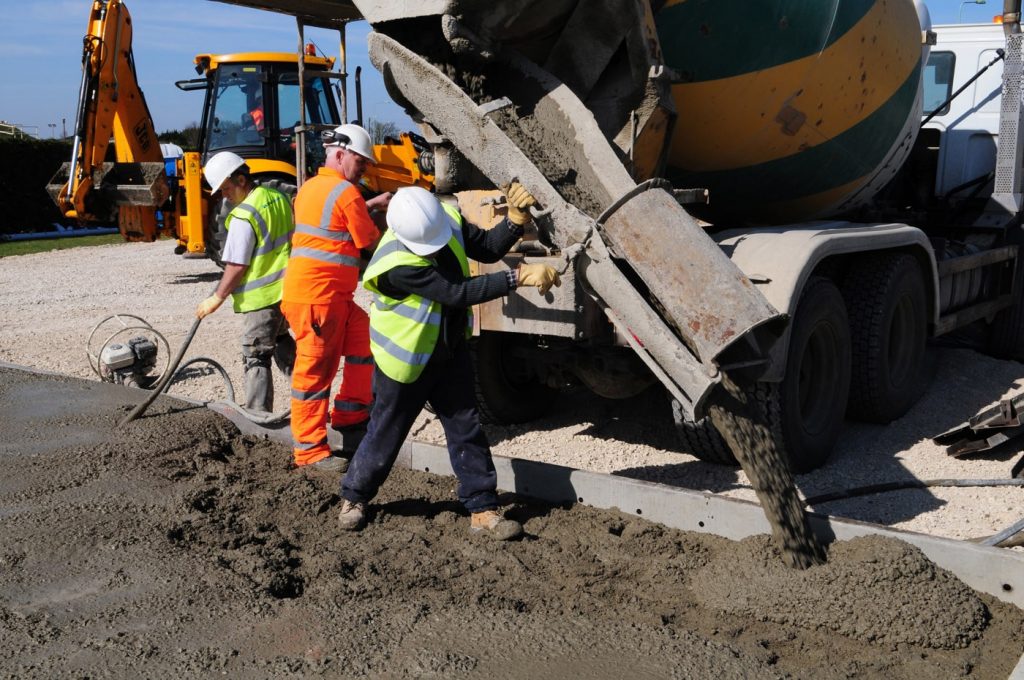
Wet Mix Macadam (WMM) is the granular base layer used below the asphalt pavement on most highway, state road, and urban infrastructure projects in India. It is a mechanically produced mixture of well-graded crushed aggregates and water, compacted in layers to form a dense, stable foundation that distributes traffic loads across the subgrade and provides a firm, uniform surface for the asphalt layers above.
Without a properly constructed WMM layer, even high-quality asphalt pavement will fail prematurely — cracking, rutting, or losing shape under traffic because the base beneath it cannot adequately distribute the load. Getting the WMM layer right is not optional — it is the structural backbone of every bituminous road project that uses it.
At Kaushik Engineering Works, we manufacture wet mix macadam plants ranging from 100 TPH to 300 TPH from our Sanand, Ahmedabad facility, supplying contractors across India and internationally. This guide covers everything you need to know about WMM — from materials and specifications to the plant working process and how it compares to the older WBM method.
What Is Wet Mix Macadam?
Wet Mix Macadam is a base or sub-base course material specified under MORTH (Ministry of Road Transport and Highways) Clause 406 for use on national highways, state highways, and urban roads. It consists of crushed aggregates of defined size and gradation, mixed with a controlled quantity of water in a pugmill or twin-shaft mixer at a plant, then transported to the road site for spreading and compaction.
The key distinction from older base construction methods — particularly Water Bound Macadam (WBM) — is that the mixing is done mechanically at a controlled plant, not manually at the road site. This produces a uniform, consistent mixture every time, with predictable strength and density after compaction, rather than the variable results of hand-mixed or site-mixed WBM.
MORTH Clause 406 specifies WMM as the base course material for roads carrying traffic up to 20 million standard axles (msa), which covers the vast majority of Indian national and state highway projects.
WMM vs WBM — Key Differences
Water Bound Macadam (WBM) was the standard base construction method in India for decades before WMM replaced it on most government highway specifications. Understanding the differences explains why WMM became the preferred base layer for NHAI and state PWD projects.
| Factor | Wet Mix Macadam (WMM) | Water Bound Macadam (WBM) |
|---|---|---|
| Mixing method | Mechanical — controlled pugmill at plant | Manual — water applied at site by hand or sprinkler |
| Consistency | High — controlled water content and gradation | Variable — depends on site conditions and labour |
| Construction speed | Fast — plant production of 100–300 TPH | Slow — layer-by-layer site construction |
| Drying time before overlay | Short — typically 24 hours before prime coat | Long — several days to weeks for moisture to dissipate |
| Load distribution | Better — denser, more uniform layer | Weaker — variable density and gradation |
| Pavement life | Longer — more stable base under traffic load | Shorter — more susceptible to base failure |
| MORTH specification | Clause 406 — mandatory on most NH and SH | Clause 404 — now limited to lower-category roads |
| Cost | Higher upfront — plant required | Lower upfront — no plant needed |
The higher upfront cost of WMM is consistently offset by its lower long-term maintenance cost — WMM-based roads require significantly fewer early-life repairs than WBM-based roads operating under equivalent traffic.
WMM Aggregate Specifications — MORTH Clause 406
The quality of WMM depends heavily on the aggregates used. MORTH Clause 406 specifies both the gradation and the physical properties of aggregates acceptable for WMM. Using off-spec aggregates — even if cheaper — produces a WMM layer that will not compact to the required density or sustain the design traffic load.
Aggregate Gradation (MORTH Clause 406)
WMM uses a graded mixture of aggregates with a nominal maximum size of 53 mm, blended to meet the following grading envelope:
| IS Sieve Size | % Passing by Weight |
|---|---|
| 53 mm | 100 |
| 45 mm | 95 – 100 |
| 26.5 mm | 60 – 80 |
| 9.5 mm | 40 – 60 |
| 4.75 mm | 25 – 40 |
| 2.36 mm | 15 – 30 |
| 0.425 mm | 8 – 22 |
| 0.075 mm | 0 – 8 |
Aggregate Physical Properties
MORTH also specifies minimum physical property requirements for WMM aggregates:
- Los Angeles Abrasion Value: ≤ 40% — measures resistance to crushing and abrasion under traffic
- Aggregate Impact Value: ≤ 30% — measures resistance to impact loading
- Flakiness and Elongation Index: ≤ 30% combined — flat or elongated particles compact poorly and break easily
- Water Absorption: ≤ 2% — high absorption aggregates weaken under moisture
Aggregates that fail any of these tests should not be used in WMM, regardless of cost or availability at the project site.
How a Wet Mix Macadam Plant Works
A WMM plant mechanically blends aggregates and water to produce a uniform, specification-compliant wet mix. The working sequence covers six main stages:
Stage 1 — Aggregate Storage and Feeding
Four or more aggregate bins store different size fractions separately. Manually adjustable gates and variable-speed feeder drives under each bin control how much of each fraction is released onto the collection conveyor. KEW WMM plant bins are all-welded and modular — additional bins can be added as project gradation requirements change. Steep bin walls and valley angles ensure free flow of aggregates even with sticky or moist material, reducing material bridging in corners.
Stage 2 — Screening
A vibrating screen at the conveyor discharge removes any oversized particles that would create gradation spikes in the finished mix. Oversized material is rejected before entering the pugmill — protecting mixer components and ensuring the finished WMM stays within the MORTH gradation envelope.
Stage 3 — Conveying to Pugmill
The screened, proportioned aggregates travel on a charging conveyor to the pugmill mixer inlet. The conveyor speed and capacity are matched to the pugmill’s rated throughput to ensure continuous, uninterrupted feed.
Stage 4 — Mixing in the Pugmill
The pugmill (twin-shaft paddle mixer) is where aggregate and water are combined. Water is added through pressurised spray jets positioned above the mixing zone, distributing moisture uniformly over the aggregate surface as the paddles rotate. KEW pugmill paddle arms and tips are heavy-duty Ni-hard alloy — designed for the abrasive conditions of aggregate mixing to minimise wear and reduce replacement frequency. The twin-shaft design ensures all aggregate particles up to 60 mm are uniformly wetted.
Water content in WMM is controlled at Optimum Moisture Content (OMC) — the moisture level at which the mix achieves maximum dry density after compaction. Getting this right at the plant is essential: too little water gives poor compaction; too much gives a saturated mix that cannot be compacted without squeezin out moisture and weakening the structure.
Stage 5 — Load-Out
The finished WMM discharges from the pugmill onto a load-out conveyor that directs the mix into waiting tippers. Transit time from plant to site must be managed to prevent moisture loss — WMM that arrives at the site significantly drier than OMC will not compact correctly.
Stage 6 — Control System
KEW WMM plants are supplied with a fully computerised control cabin with automatic process and sequence controls. The control system synchronises aggregate feed rates, water addition, and conveyor speeds — maintaining the target gradation and moisture content throughout the shift without manual adjustment.
WMM Site Construction — Spreading, Compaction and Quality Control
Producing correct WMM at the plant is only half the job. The way the material is handled, spread, and compacted at the road site determines the final layer quality.
Spreading: WMM is spread with a motor grader to a uniform layer thickness. MORTH specifies a maximum compacted layer thickness of 200 mm per layer. If the design requires a deeper base, two or more WMM layers are constructed separately, each compacted before the next is placed.
Compaction: A vibratory roller compacts the WMM layer to the specified density. MORTH requires a minimum degree of compaction of 98% of maximum dry density as determined by the modified proctor test. Compaction must be completed before the moisture in the WMM drops below OMC — which means delays between spreading and rolling should be minimised, particularly in hot, dry weather conditions.
Quality control testing required on site:
- Gradation check of aggregate stockpiles — minimum one test per 200 cubic metres
- Moisture content of mix — checked before and during compaction
- Field density test — minimum three tests per 500 square metres of completed layer
- Level and thickness check — surface regularity under a 3-metre straight edge
Prime coat: After compaction and a curing period — typically 24 hours — a prime coat of bitumen emulsion or cutback bitumen is applied using a bitumen pressure distributor before the first asphalt layer is placed. The prime coat penetrates the WMM surface, sealing it and creating the adhesive bond needed for the asphalt layer to lock on.
Frequently Asked Questions — Wet Mix Macadam
What is the difference between WMM and WBM in road construction?
WMM (Wet Mix Macadam) is mixed mechanically in a plant under controlled conditions, producing a uniform, consistent base layer. WBM (Water Bound Macadam) is constructed manually at the road site by spreading aggregate layers and applying water by hand or sprinkler. WMM gives better density, faster construction, shorter curing time, and longer pavement life. MORTH now specifies WMM under Clause 406 for most national and state highway base course construction.
What is the MORTH specification for WMM?
WMM is specified under MORTH Clause 406. The specification covers aggregate gradation (nominal maximum size 53 mm, graded to a defined envelope), physical properties (LA abrasion ≤40%, aggregate impact value ≤30%, flakiness and elongation ≤30%), water content (at or near OMC), and compaction requirements (minimum 98% of maximum dry density). All WMM used on NHAI and state highway projects must conform to these specifications and be verified by quality control testing.
What capacity WMM plant do I need?
The required WMM plant capacity depends on your project’s daily output target and working hours. Divide the target daily tonnage by productive working hours to get the required TPH. For example, a project needing 800 tonnes of WMM per day over 8 working hours needs a plant capable of at least 100 TPH. KEW WMM plants range from 100 TPH to 300 TPH and can be configured for your specific project. Refer to our WMM plant capacity guide for a more detailed calculation approach.
What is Optimum Moisture Content (OMC) in WMM?
Optimum Moisture Content is the water content at which a soil or aggregate mix achieves its maximum dry density when compacted under a standard effort — as determined by the Proctor compaction test. For WMM, the OMC is typically in the range of 5 to 8% by weight of dry aggregate, depending on the aggregate type. Mixing at or near OMC ensures the material compacts to the maximum achievable density, giving the strongest and most stable base layer.
How long does WMM take to cure before asphalt can be laid?
WMM typically requires a minimum curing period of 24 hours after compaction before prime coat application. After prime coat, a further 24 to 48 hours is usually required before the first asphalt layer is placed. On NHAI projects, the actual curing period is specified in the project’s quality plan and may be extended in humid weather conditions where moisture dissipation is slower.
Can a WMM plant also produce other base materials?
Yes. KEW WMM plants can also be used to produce Crusher Run Macadam (CRM) and other graded aggregate base materials by adjusting the aggregate bin proportioning and water addition settings. The modular bin design allows the plant to be reconfigured for different gradation requirements without structural modification.
Get a Quote for KEW Wet Mix Macadam Plant
Kaushik Engineering Works manufactures wet mix macadam plants from 100 TPH to 300 TPH at our Sanand, Ahmedabad facility. Our plants feature all-welded modular bins, heavy-duty Ni-hard pugmill tips, fully computerised controls, and full commissioning support. We supply WMM plants across India and to international markets in 35+ countries.
Contact our team to discuss your project requirements, capacity needs, and site conditions — or read our detailed guide on the importance of wet mix macadam in road construction.
📞 +91 98251 64764 | +91 2717 415587
📧 info@kaushikengineeringworks.com
📍 PE-107, Sanand II Industrial Estate, Bol GIDC, Sanand, Ahmedabad – 382110, Gujarat, India
🕐 Mon–Sat: 8:00 AM – 7:00 PM

