
Project managers often face a difficult choice when road construction machinery breaks down. Do you spend more money on another temporary fix or finally invest in new equipment? The line between routine maintenance and a total financial drain is thin. Every hour your machinery sits idle means wasted labour costs and delayed project timelines.
At the centre of your paving operation is your asphalt mixing plant. When this massive piece of machinery stops performing at its peak, your entire construction schedule falls apart. Many contractors push their equipment to the absolute limit. They replace belts, weld broken drums, and swap out sensors to keep the hot mix flowing. However, patching a dying machine eventually costs more than financing a new one.
This guide will help you identify the critical warning signs that your current setup is failing. We will explore how modern technology improves efficiency and why holding onto outdated equipment threatens your business growth.
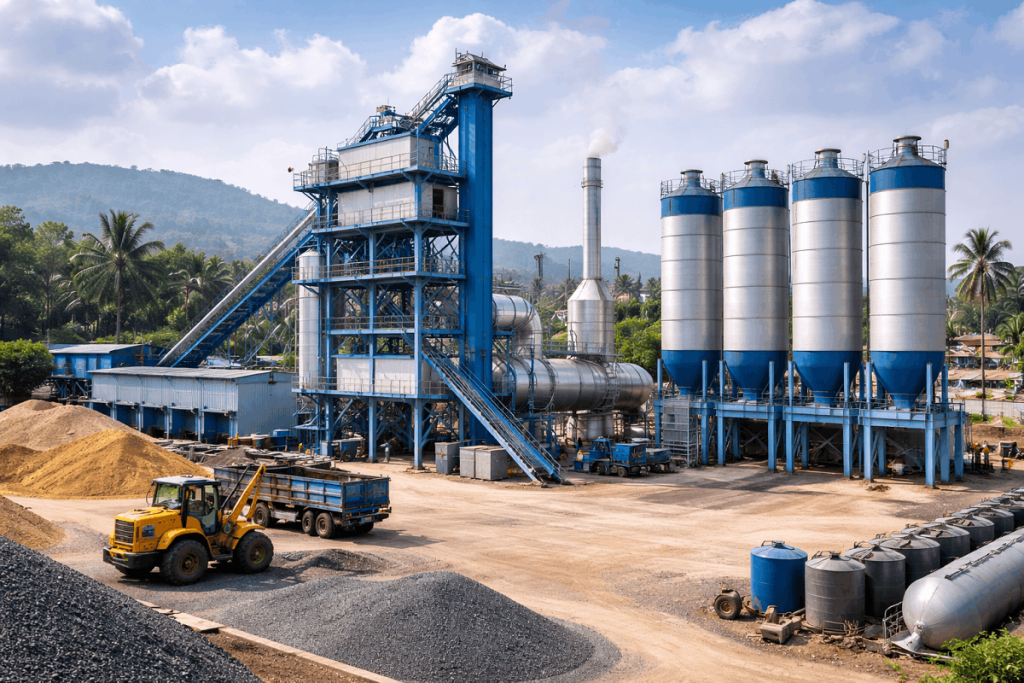
The Financial Trap of Ageing Road Construction Equipment
Let us look at the real cost of keeping outdated machinery alive. Every piece of heavy equipment has a specific peak operational window. During the first few years, your asphalt mixing plant runs efficiently with minimal downtime. But as the years pass, the metal fatigues and critical components wear out from constant exposure to extreme heat and abrasive aggregates.
You might think you are saving money by avoiding a new purchase. The reality is quite the opposite. The financial trap of ageing equipment is hidden in your daily operating costs. An older machine requires more fuel to heat the aggregates to the target temperature. It demands constant attention from your maintenance crew. It forces you to pay overtime to workers who had to stand around while a jammed conveyor belt was fixed.
These hidden costs add up quickly over a single paving season. Furthermore, outdated technology slows down your daily production capacity. When you bid on massive highway infrastructure projects, government agencies and private developers look closely at your equipment fleet. If your competitors run a high-capacity, highly efficient asphalt drum mix plant, they can offer lower bids and faster completion times. Relying on an old plant puts your construction firm at a severe disadvantage in a highly competitive market.
There is a precise tipping point where the cumulative cost of replacement parts, wasted fuel, and lost production completely overshadows the monthly financing cost of a brand new setup. Smart fleet managers track these metrics closely to know when it is time to upgrade.
Red Flags Revealing Your Asphalt Mixing Plant Is Failing
Operators deal with minor hiccups every day. But some issues signal a deep structural failure within your machinery. If your crew constantly battles the following problems, your asphalt mixing plant is likely beyond saving.
1. Unpredictable Mix Quality and Temperature Drops
The quality of your hot mix dictates the durability of the final road surface. Your plant must maintain a precise temperature to ensure the bitumen binds correctly with the aggregates. Older plants often suffer from poor thermal efficiency. The drying drum loses its ability to retain heat, causing drastic temperature fluctuations during the mixing process.
When the mix drops below the required temperature, it becomes stiff and impossible to pave properly. This leads to rejected loads at the job site. Every rejected truckload means wasted raw materials and a massive hit to your profit margin. If your quality control team constantly flags inconsistent batch quality or temperature drops, your plant’s core heating and mixing mechanisms are failing.
2. Skyrocketing Fuel Consumption at the Burner
Fuel is one of the largest ongoing expenses in road construction. The burner is the heart of your asphalt mixing plant. It provides the intense heat required to remove moisture from the raw aggregates. Over time, burner nozzles clog, air flow systems degrade, and the combustion process becomes highly inefficient.
You will notice this failure in your accounting books first. If the cost per ton of production suddenly spikes while your output remains the same, your burner is wasting fuel. Older models struggle to atomise the fuel properly. This means you are burning more diesel or gas just to achieve the same aggregate temperature. Upgrading to a modern plant with an advanced, fuel-efficient burner translates to immediate and noticeable savings on your daily fuel bills.
3. Frequent Material Blockages and Cold Feed Bin Jams
A smooth material flow is essential for continuous production. Your cold feed bins must supply a steady, accurate stream of varied aggregates to the drying drum. In an ageing asphalt mixing plant, the vibrating feeders and conveyor belts lose their calibration.
When calibration fails, you experience constant material blockages. The aggregates bridge together in the bins or spill off misaligned conveyor belts. Your operators are forced to halt production, climb up the machinery, and manually clear the jams. This completely ruins your daily production targets. If your crew spends more time unclogging bins than producing hot mix, the mechanical integrity of your material handling system is compromised. For continuous operations, a reliable asphalt drum mix plant requires flawless material flow to prevent the entire system from shutting down.
4. Visible Structural Fatigue and Constant Welding Repairs
Road construction machinery endures a brutal daily environment. Extreme heat, constant heavy vibration, and highly abrasive raw materials take a massive toll on the metal framework. Over the years, the structural integrity of your equipment naturally degrades.
If your maintenance crew spends hours every week patch-welding cracks on the drying drum, the hot elevator, or the main chassis, you have a serious problem. Metal fatigue is not something you can fix permanently with a quick weld. These structural weak points pose a severe safety hazard to your site operators. A sudden collapse of a storage silo or a major drum failure will instantly halt your entire project and endanger your workforce. When the physical framework of your asphalt mixing plant begins to warp, rust, and crack under the daily strain, it is an undeniable sign that the machine has reached the end of its safe operational life.
5. The Struggle to Find Genuine Spare Parts
Manufacturers eventually phase out support for older machinery models. When your ten-year-old plant breaks down, finding the replacement sensor, motor, or valve becomes a massive challenge.
You cannot afford to wait weeks for a specialised part to ship from overseas. This forces site mechanics to fabricate custom parts or rely on low-quality third-party alternatives just to get the plant running again. Using mismatched parts causes a ripple effect of mechanical failures. The new parts put uneven stress on the older components, leading to even more frequent breakdowns. When finding basic spare parts becomes a daily struggle, it is a clear sign that your equipment has reached the end of its lifespan.
How Modern Technology Outpaces Legacy Systems
Technology moves incredibly fast in the road construction industry. A modern asphalt mixing plant looks and operates very differently from a model built a decade ago. The biggest shift is the move away from manual controls and basic relay systems.
Sophisticated Programmable Logic Controller panels drive today’s machinery. These advanced control systems take the guesswork out of the paving process. An operator can set the mix recipe on a digital touchscreen. The system then automatically adjusts the aggregate weighing scales, the bitumen injection rates, and the burner intensity to match the recipe perfectly.
This level of automation ensures every single batch is identical to the last. It eliminates human error from the measuring process. Furthermore, modern plants are equipped with self-diagnostic software. Instead of spending hours hunting for a broken wire, the control panel instantly alerts the operator to the exact location of a fault. This drastic reduction in troubleshooting time keeps your project moving forward. Investing in new technology means investing in precision, reliability, and ultimately a much higher quality road surface.
Strict Emission Control Standards Are Changing the Game
Environmental regulations get stricter every year. Government bodies and local municipalities now demand green infrastructure practices. If your asphalt mixing plant pumps out thick black smoke and heavy dust, you risk heavy fines and immediate site shutdowns.
The True Cost of Failing Environmental Audits
Older equipment was not designed to meet the rigorous environmental standards we see today. They rely on basic wet dust collectors that fail to capture fine particulate matter. When a government inspector visits your site and tests your emission levels, an outdated plant will almost certainly fail the audit.
Failing an environmental audit halts your entire operation. The legal fees, daily fines, and mandatory retrofitting costs will destroy your project budget. Furthermore, clients are now writing strict environmental compliance clauses into their contracts. If your machinery is known to be a heavy polluter, you will simply stop winning bids for lucrative government highway projects.
Why Advanced Baghouse Filters Are Non-Negotiable
You can no longer rely on outdated dust collection methods. A modern asphalt mixing plant integrates advanced baghouse filter systems directly into the exhaust flow. These systems act like a massive industrial vacuum. They pull the exhaust gases through hundreds of specialised fabric bags.
The bags trap up to 99 per cent of the harmful dust and particulate matter before the exhaust reaches the atmosphere. The best part is that these modern systems take the trapped dust and recycle it back into the hot mix. This means you eliminate air pollution while simultaneously saving money on raw materials. A clean, compliant site also protects the respiratory health of your workforce and the surrounding local communities.
Does Plant Relocation Cause Endless Downtime
Road construction is inherently a mobile business. Contractors finish a highway stretch and immediately move to the next sector. Your equipment must be able to handle frequent teardowns, transport, and rebuilds.
Older stationary plants were built with heavy, rigid structures. Every time you dismantle an old asphalt mixing plant, the structural integrity degrades. The constant bolting and unbolting warps the metal frames. Electrical cables become frayed from repeated handling. Reassembling an ageing plant at a new site often takes weeks of frustrating labour and troubleshooting just to get it calibrated again.
If your company frequently tackles regional projects, this downtime is unacceptable. Modern manufacturers design mobile and modular plants specifically for rapid deployment. The components are built onto a pre-wired chassis. You simply tow the units to the new location, plug the modules together, and start producing mix within a few days. If moving your current equipment feels like a logistical nightmare that delays your paving schedule, it is time to look at modern, highly portable solutions.
Frequently Asked Questions
1. How long does delivery and installation take for new asphalt equipment?
Lead times vary based on capacity and specific customisations. Standard models from reputable manufacturers usually require four to eight weeks for manufacturing, site delivery, and full operational commissioning.
2. Can I connect my old bitumen storage tanks to a brand new plant?
Yes. Most modern setups feature adaptable heating coils and plumbing systems designed to integrate seamlessly with your existing bitumen tanks and raw material silos to keep initial capital costs down.
3. What is the minimum land area required for a high-capacity modular setup?
A standard 120 TPH facility needs roughly 1.5 to 2 acres of levelled ground. This space comfortably accommodates the main machinery, control cabin, aggregate stockpiles, and a safe turning radius for large transport trucks.
4. Do my site operators need special training for the latest digital control panels?
Modern software is highly intuitive and user-friendly. Equipment manufacturers provide comprehensive on-site training during the installation phase to ensure your crew confidently manages the automated weighing and production processes.
5. Do tax depreciation rules apply to new heavy machinery purchases?
Procuring fresh construction equipment often qualifies your business for significant capital depreciation deductions under standard corporate tax laws. Consult your financial advisor to structure the purchase for maximum tax relief.
6. What warranty coverage comes standard with newly manufactured paving plants?
Top-tier manufacturers back their structural components and core moving parts with a comprehensive one-year warranty. This protects against manufacturing defects and includes dedicated technical support to guarantee uninterrupted early operations.
Upgrade Your Paving Fleet With Trusted Experts
There comes a time when patching up old machinery is simply bad business. You cannot build modern roads using the failing technology of the past. Holding onto a deteriorating setup drains your finances and puts your business reputation on the line. When you finally decide to step up your operations, partnering with reputable construction equipment manufacturers makes all the difference. Top-tier experts do not just sell you a machine. They engineer reliable solutions that fit your specific project capacity, local climate, and budget.
Investing in a brand new asphalt mixing plant completely eliminates unexpected breakdowns. It slashes your daily operating costs immediately. You get much better fuel efficiency and exact mix quality for every single batch. You also gain complete peace of mind knowing your site complies with the latest environmental regulations. A reliable setup allows your crew to focus on laying down perfect roads rather than acting as full-time mechanics.
Take a close look at your maintenance logs and your recent fuel bills today. If the warning signs are clear, you need to take action before a sudden breakdown halts your entire project. Reach out to the engineers at Kaushik Engineering Works to discuss a modern, durable, and custom-built system designed to help you win your next big highway contract.
